




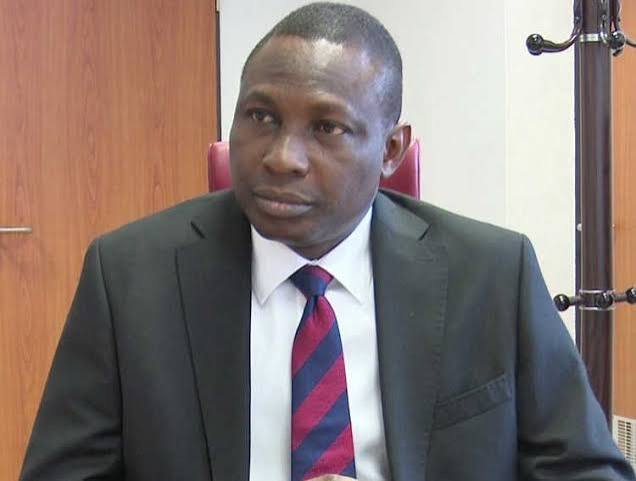
Pressure is mounting on Economic and Financial Crimes Commission Chairman Ola Olukoyede following the agency’s decision to freeze accounts belonging to the Osun State Government. This move came just days before the August 15 governorship election.
According to The Punch, opposition parties and some Nigerians intensified calls for Olukoyede’s resignation on Friday. They accused the anti-graft agency of allowing itself to become entangled in the politics surrounding the closely watched election.
The controversy began after the EFCC restricted transactions on Osun government accounts while investigating suspected diversion of public funds and money laundering.
President Bola Tinubu subsequently directed the commission to reverse the restriction, describing the timing of the action as embarrassing.
His intervention, however, triggered another round of debate over both the independence of the EFCC. It also raised questions about Olukoyede’s continued leadership of the commission.
Opposition parties demand Olukoyede’s exit
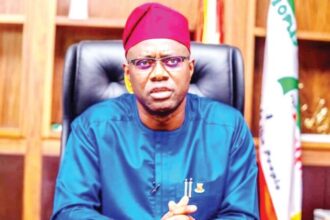
The Accord Party, whose candidate Governor Ademola Adeleke is seeking re-election, said it had lost confidence in the EFCC chairman.
Accord National Chairman Maxwell Mgbudem accused the commission of displaying political bias. He called on Olukoyede to resign or be removed by the President.
He argued that freezing the accounts so close to the election raised questions about the commission’s neutrality.
The New Nigeria People’s Party also backed calls for Olukoyede to step aside. However, its national chairman, Major Agbo, questioned Tinubu’s decision to intervene directly in an EFCC investigation.
Agbo said presidential instructions to the commission could weaken public confidence in its independence.
The Obidient Movement’s national coordinator, Yunusa Tanko, similarly advised Olukoyede to consider resigning to protect his reputation.
Presidency says EFCC chairman will keep his job
Despite the mounting criticism, Presidency officials reportedly dismissed suggestions that Olukoyede was about to be removed.
Officials familiar with the matter said Tinubu’s concern was primarily about the timing and political consequences of the account restriction. It was not about the EFCC chairman’s overall leadership.
One Presidency source said disagreement with the President over the development did not automatically mean Olukoyede would lose his position.
The comments suggest the EFCC chairman is unlikely to be immediately removed despite opposition demands.
Falana backs EFCC, questions Tinubu’s intervention
Human rights lawyer Femi Falana also rejected calls for Olukoyede’s resignation and instead questioned the President’s intervention.
Falana argued that the EFCC has statutory powers to restrict accounts where it suspects financial wrongdoing. Also, he maintained that disputes over such orders should be resolved through the courts.
He also questioned whether the President had the legal authority to direct the anti-graft agency on how to handle the investigation.
Labour Party spokesman Ken Asogwa took a similar position. He said he would not support calls for Olukoyede’s resignation but was concerned about the implications of presidential interference in the commission’s work.
Court document confirms freeze order
The controversy deepened following questions over whether the EFCC had obtained judicial approval before restricting the accounts.
A certified court document later showed that the commission secured an order from the Federal High Court in Abuja on August 5.
The order authorised the freezing of three Osun State Government accounts. This happened while the EFCC investigates allegations involving diversion of public funds and money laundering.
This appeared to contradict earlier claims surrounding whether a valid court order existed when the restrictions were imposed.
House minority lawmakers seize on controversy
The minority caucus in the House of Representatives also criticised the handling of the matter. They accused the Federal Government and EFCC of sending conflicting messages.
The lawmakers questioned why Tinubu directed the commission to approach the court to reverse the restriction. Uncertainty persisted over whether the original action had been backed by a court order.
They also alleged that the timing of the EFCC action risked undermining confidence in the electoral process.
With the Osun governorship election only days away, the dispute has moved beyond an anti-corruption investigation. It has now become a major political issue.
While opposition groups are demanding Olukoyede’s resignation, the Presidency has indicated that his position remains secure. As a result, questions over the EFCC’s independence and the timing of its intervention remain at the centre of the controversy.