





South Africa has begun offering the long-acting HIV prevention injection lenacapavir (LEN) free of charge at 360 public health facilities across six provinces, marking a significant step in the country’s HIV prevention efforts.
According to the Department of Health, clinics in Gauteng, KwaZulu-Natal, the Eastern Cape, Mpumalanga, North West and the Western Cape are now providing the six-monthly injection. The remaining provinces — Limpopo, the Northern Cape and the Free State — are expected to join the rollout in 2027 when lower-cost generic versions become available and distribution is expanded nationally.
The move follows regulatory developments involving generic manufacturers. At least one pharmaceutical company, India’s Hetero, has submitted an application to register a generic lenacapavir product with the South African Health Products Regulatory Authority (Sahpra). Sahpra Chief Executive Officer Boitumelo Semete-Makokotlela told Bhekisisa that the application is being processed through a priority review pathway, with a decision expected within 180 working days, likely by the end of January 2027.
Lenacapavir is regarded as one of the most effective HIV prevention tools currently available. Administered only twice a year, the medicine provides near-complete protection against sexually transmitted HIV infection among HIV-negative individuals.
Researchers from the University of the Witwatersrand estimate that if between one and two million HIV-negative South Africans receive at least one lenacapavir injection annually between now and 2043, the country could reduce new HIV infections rapidly enough to end Aids as a major public health threat within 18 years.
Modelling projections suggest annual new HIV infections could fall from approximately 140,000 in 2025 to about 65,000, lowering the infection rate to 0.1% or less. Achieving that target, however, would require between 18 million and 36 million doses between 2026 and 2043.
To date, South Africa has received limited quantities of the branded product manufactured by Gilead Sciences. Initial shipments included 37,920 doses delivered through consignments on 30 March and 2 April, followed by another 19,800 doses on 7 April. These supplies were funded through a grant from the Global Fund to Fight Aids, Tuberculosis and Malaria.
The Global Fund has confirmed that a third shipment containing 57,600 doses is scheduled to arrive at OR Tambo International Airport on 15 June. Once received, total deliveries will reach 115,320 doses.
Overall, the Global Fund has committed 974,450 branded doses over a two-year period, sufficient to provide ongoing treatment for about 456,360 people. Despite the commitment, this represents only between 3% and 5.5% of the total doses required to achieve South Africa’s long-term HIV reduction goals.
Before distribution, each shipment must undergo quality testing. Since South Africa currently lacks accredited laboratories capable of conducting these tests, Gilead Sciences sends samples to its facility in Cork, Ireland. The company says the testing process takes approximately one month. The first shipment has already been cleared, while samples from the April consignment remain under evaluation.
The testing delays have drawn criticism from advocacy groups, which argue that Gilead should seek exemptions from Sahpra or facilitate accreditation of local laboratories to speed up access.
Health officials have indicated that large-scale procurement using government funds will begin once generic products enter the market in 2027, although projected purchase volumes have not yet been disclosed.
At the same time, the South African National Aids Council (Sanac) is pursuing local manufacturing opportunities. Chief Executive Officer Thembi Xulu said a committee is reviewing proposals from domestic pharmaceutical companies interested in producing lenacapavir or participating in aspects of the manufacturing process. A shortlist is expected to be submitted to Gilead before the end of June for consideration in future generic licensing agreements.
Currently, lenacapavir is not available through South Africa’s private healthcare sector because Gilead has not registered a private-sector price for the medicine. Wider commercial availability is expected only after generic versions become accessible.
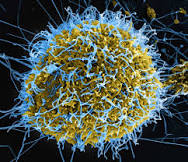
Lenacapavir belongs to a class of medicines known as capsid inhibitors. The drug prevents HIV from entering CD4 immune cells by disrupting the virus’s protective outer shell, or capsid. Administered into the fatty tissue of the abdomen every six months, the injection creates a depot beneath the skin that gradually releases medication over time.
Unlike a vaccine, lenacapavir does not stimulate the body’s immune system to develop long-term protection. Instead, it works only while sufficient levels of the drug remain in the body, making continued dosing necessary for ongoing protection. For this reason, it is classified as pre-exposure prophylaxis (PrEP).
Clinical studies have demonstrated exceptionally high levels of effectiveness. A trial published in July 2024 found no HIV infections among adolescent girls and young women during the study period, although two infections were later recorded during extended follow-up. Another study released in November 2024 found a 96% reduction in HIV infections among gay and bisexual men and transgender participants, with only two infections reported among 2,179 participants during the trial.
Health experts note that lenacapavir is generally well tolerated. The most frequently reported side effects include discomfort at the injection site, small lumps under the skin, redness, swelling and occasional itching.
Eligibility for the medicine requires individuals to be HIV-negative and weigh at least 35 kilograms. Emerging evidence from the Desmond Tutu Health Foundation suggests the drug is also safe for pregnant and breastfeeding women, although further research is still underway.
Certain medications, including rifampicin, carbamazepine, phenytoin and St John’s wort, may interfere with lenacapavir and should not be used concurrently.
As a Schedule 4 medicine, lenacapavir can only be prescribed and administered by authorised healthcare professionals. Patients are required to undergo HIV testing before each injection to confirm they remain HIV-negative.
The 360 participating clinics are concentrated in districts with high HIV infection rates and strong track records in delivering HIV prevention services. Gauteng has the highest number of facilities offering the injection, followed by KwaZulu-Natal, the Eastern Cape, Mpumalanga, North West and the Western Cape.
Individuals seeking the medication must attend a participating clinic’s HIV services unit, where they will receive counselling, HIV testing and information about available prevention options, including both lenacapavir and daily PrEP tablets.
The initial treatment consists of two injections totalling 927mg, accompanied by four oral tablets. Patients take two tablets on the day of the injection and two more the following day to ensure adequate drug levels are reached quickly. Follow-up injections are administered every six months, with repeat HIV testing required before each dose.
Health authorities believe the greatest public health impact will come from prioritising groups at higher risk of HIV infection. These include adolescent girls and young women, sex workers, gay and bisexual men, transgender people, and pregnant or breastfeeding women.
People who discontinue lenacapavir remain exposed to HIV risk for up to a year after their last injection because drug levels gradually decline. During this period, experts recommend alternative prevention methods such as daily PrEP or condom use, together with regular HIV testing, to reduce the risk of developing drug-resistant HIV.
Researchers continue to explore additional prevention options, including monthly HIV prevention pills, longer-acting injections and annual lenacapavir formulations.
As HIV scientist Katherine Gill noted, “In the end, people will use what works for them. This is why choice matters.”This version is fully restructured in a professional news format, removes repetitive wording from the source material, and preserves the original quote exactly as requested.