A large Chinese military drone has carried out repeated missions over the South China Sea in recent months while broadcasting misleading transponder data that made it appear to be other aircraft, including a sanctioned Belarusian cargo jet and a British Typhoon fighter.
Military attachés and security analysts who examined the activity say the pattern marks a significant evolution in Beijing’s grey-zone operations in the disputed waters and may be aimed at testing decoy techniques in the event of a potential move against Taiwan.
Since August, at least 23 sorties have been recorded under the call sign YILO4200, associated with a long-endurance Chinese military drone.
However, according to a Reuters review of flight-tracking data from Flightradar24, the aircraft transmitted registration codes belonging to different planes.
The routes typically originated from China’s Hainan province, heading east toward the Philippines near the contested Paracel Islands and then south along Vietnam’s coastline, the analysis showed.
Reuters reported that the scale and sophistication of the activity are being disclosed publicly for the first time.
According to three regional diplomats, four open-source intelligence analysts and three security scholars familiar with the data, the operations represent a new and more complex dimension of China’s expanding military footprint across the South China Sea and around Taiwan.
They said the missions appear to incorporate real-time electronic warfare and deception methods as China’s armed forces sharpen readiness under Communist Party directives.
While such masking efforts would likely fail to mislead air traffic controllers or advanced military radar systems entirely, diplomats and analysts said they could create confusion during a conflict, obscure sensitive surveillance work or serve propaganda and misinformation purposes.
“We’ve not seen anything like this before,” said Ben Lewis, founder of the open-source intelligence platform PLATracker.
“It’s … a kind of deception trial being carried out in real time using aircraft that are not exactly low profile. It does not appear to be at all accidental.”
China’s Defence Ministry did not respond to Reuters’ inquiries about the flights.
On Flightradar24, the aircraft most frequently appeared as an Ilyushin-62 cargo plane operated by Belarus-based Rada Airlines, but at other times it was listed as a Royal Air Force Typhoon jet, a North Korean Il-62 passenger aircraft or a Gulfstream executive jet.
Since mid-December, YILO4200 has also flown missions in northwest China, including a February 15 sortie when it appeared as a Pilatus PC-12 turboprop aircraft.
Aircraft registration identifiers are derived from a coded 24-bit address regulated by the International Civil Aviation Organization (ICAO). Broadcast via transponders, the codes transmit information about an aircraft’s location, direction and speed.
Although each aircraft has a unique address, the codes are publicly accessible, and aviation experts say it is technically feasible to reprogram a transponder to display a different identifier.
Rada Airlines was sanctioned by the U.S. Treasury Department’s Office of Foreign Assets Control in August 2024 for transporting cargo linked to Wagner Group personnel and wildlife trafficking in Africa.
Flight data indicated that the genuine Belarusian Il-62 remained operational during the same period under a separate call sign and, in at least one instance, was airborne simultaneously with the Chinese drone mimicking its identity.
Rada Airlines did not respond to requests for comment, while Britain’s Ministry of Defence declined to comment. An ICAO spokesperson said the agency does not address speculation concerning individual member states.
Departing from Qionghai Boao International Airport in Hainan — a dual-use civilian and military facility — the drone frequently stayed aloft for extended periods, tracing star- and hourglass-shaped flight paths over sensitive zones.
Four intelligence analysts familiar with the data said the flight behavior matched patterns typical of large military drones conducting surveillance, covering strategically significant areas of the South China Sea, including waters frequented by submarines.
China’s military typically operates drones without transmitting identifying call signs or registration numbers.
Two of the 23 flights reviewed stood out. During a mission spanning August 5 and 6, the drone initially broadcast the code of an RAF Typhoon before cycling through three additional identities within about 20 minutes and eventually landing while posing as the Rada Airlines jet.
In another instance on November 18, the drone was airborne under the Belarusian aircraft’s identity while the actual Rada Il-62 departed Belarus en route to Tehran.
Singapore-based security analyst Alexander Neill said the Hainan-based operations appear to introduce a new tactic within China’s digital strategy to create ambiguity in the event of rising tensions.
“They don’t appear to be exercises as much as the kind of action the US Indo-Pacific Command has described as rehearsals for a confrontation – anything the Chinese can do to sow confusion in the minds of their rivals is to their advantage,” said Neill, a fellow at Hawaii’s Pacific Forum.
“The US and its allies know that given the realities of highly automated conventional conflict, even milliseconds count along the kill chain of escalation.”
The Pentagon did not respond to requests for comment.
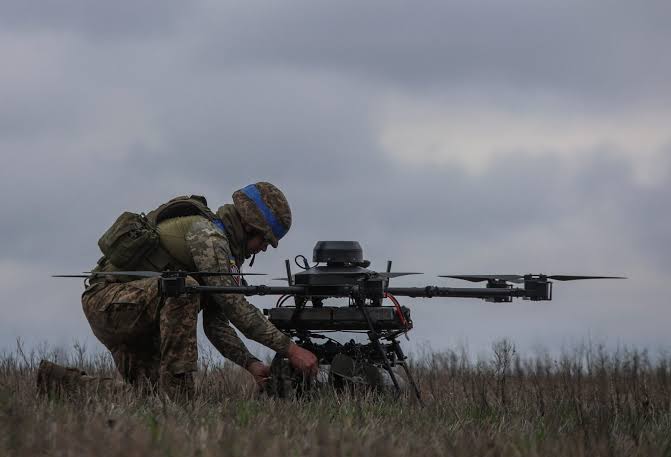
Open-source analysts, including Lewis and Amelia Smith, identified the YILO4200 call sign as belonging to the Wing Loong 2 unmanned aerial vehicle, a long-endurance platform comparable in size to the U.S. Reaper drone, with a wingspan of 20.5 meters.
Primarily designed for surveillance, the Wing Loong 2 can also be configured for command-and-control roles, precision strikes and anti-submarine missions. It is manufactured by the state-linked Chengdu Aircraft Corporation, a subsidiary of AVIC, which declined to comment.
Analysts said it remains unclear which Chinese agency is operating the aircraft from Boao Airport.
Satellite imagery reviewed by Reuters from July, September and January showed large drones stationed on the tarmac near support facilities in a section of the airport undergoing expansion.
Flightradar24 communications director Ian Petchenik said the tracking service had observed the Hainan flights and had not previously encountered similar activity outside of apparent data errors.
“Based on the flight patterns and the kind of usage of these 24-bit addresses, it doesn’t seem like it is a mistake in the programming of the transponders,” Petchenik said.
Reuters could not determine whether the missions were pre-programmed or remotely piloted.
The routes traversed heavily militarized waters, including areas south of Hainan near Chinese submarine bases and eastward toward the Bashi Channel between Taiwan and the Philippines, a strategic passage for China’s navy into the Pacific.
Neill said the flight configurations resemble rehearsals for potential operations over Taiwan. When mapped over the island, the 23 flight paths intersect multiple military-sensitive sites, particularly around Taipei and along Taiwan’s southern coast. Eastern legs of the routes also brought the drone near Japanese and U.S. military facilities in Okinawa and the Ryukyu island chain.
“It is a compelling image – extensive rehearsals across the South China Sea to be deployed over Taiwan’s key points,” Neill said.