United States Director of National Intelligence, Tulsi Gabbard, has announced her resignation on Friday, bringing an end to a tenure marked by controversy and reported tensions with President Donald Trump, particularly over policy differences related to the Iran conflict.
In her resignation statement, Gabbard, 45, said she is leaving her post to focus on her husband, Abraham Williams, who has recently been diagnosed with an “extremely rare form of bone cancer.”
“He faces major challenges in the coming weeks and months,” Gabbard said in a letter to Trump that she posted on X. “At this time, I must step away from public service to be by his side and fully support him through this battle.”
A former Democratic congresswoman, Gabbard is married to Hawaii-based cinematographer Abraham Williams. The couple, who met during campaign advertisement shoots, later married in a Hindu ceremony, and their engagement reportedly took place during a sunset surfing moment.
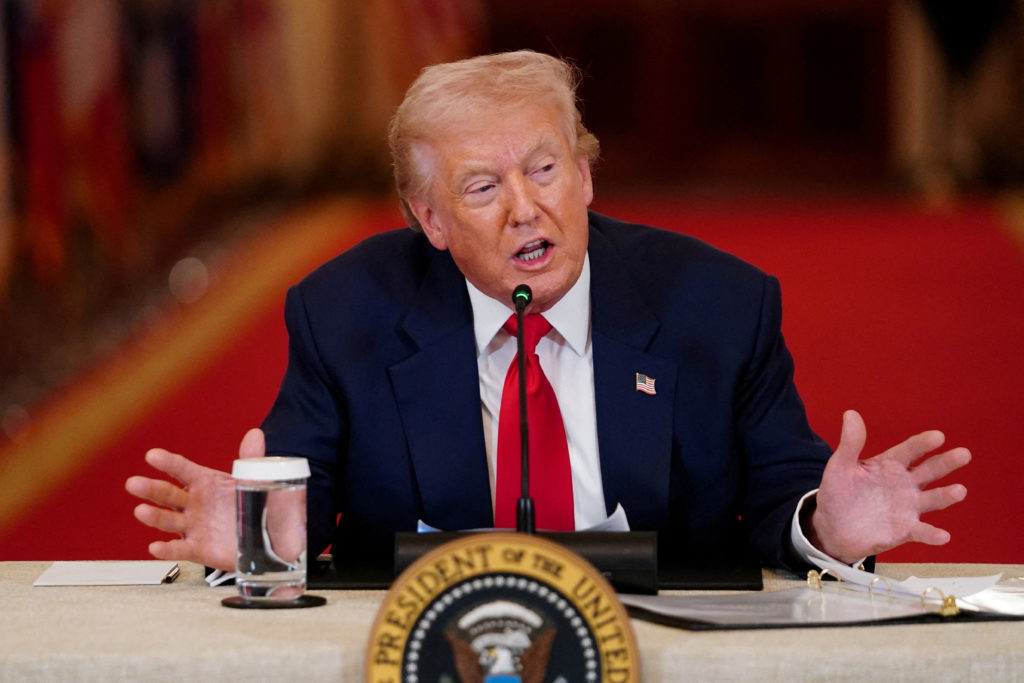
President Donald Trump praised her service following the announcement, describing her performance in office positively while acknowledging her decision to prioritize family.
“Tulsi has done an incredible job, and we will miss her,” Trump said on his Truth Social network, adding that she “rightfully” wanted to help her husband with his cancer battle.
He also confirmed that her deputy, Aaron Lukas, will serve as acting Director of National Intelligence.
Gabbard becomes the fourth high-profile female official to exit Trump’s cabinet in recent months, following a series of departures including Homeland Security Secretary Kristi Noem in March and Attorney General Pam Bondi in April. Labor Secretary Lori Chavez-DeRemer also stepped down the same month amid reported controversies.
However, the White House strongly rejected claims suggesting she was pressured out of office.
“This is false. Her husband, who is an absolutely incredible human being, has been diagnosed with a rare bone cancer,” her chief of staff, Alexa Henning, said on X.
White House spokesperson Davis Ingle also dismissed such suggestions, stating that “any suggestion that the White House forced her to resign over her husband’s health is slanderous.”
Gabbard’s appointment had been widely viewed as unexpected due to her political background and prior positions, including criticism of U.S. foreign military interventions and endorsement of views considered controversial by some officials.
During her time in Congress, she notably opposed potential military action against Iran and drew scrutiny for a 2017 meeting with then-Syrian President Bashar al-Assad, as well as for comments seen as aligned with Russian narratives regarding the Ukraine conflict.
She was also frequently questioned over her stance on U.S. surveillance programs and her support for whistleblower Edward Snowden.
Despite early support from Trump, reports indicated she was increasingly sidelined from key decision-making, especially in the lead-up to U.S. and Israeli strikes on Iran on Feb. 28.
Gabbard was reportedly absent from high-level meetings preceding the operation and later publicly diverged from some of the administration’s justifications for the conflict.
She declined to endorse claims that Iran posed an imminent threat, which had been used to justify military action, and also challenged assertions that Iran was actively rebuilding nuclear enrichment capabilities following earlier strikes.
A U.S. Army National Guard veteran who served in Iraq, Gabbard has often cited her military experience as the foundation for her opposition to prolonged foreign wars, a view she has shared with other political figures such as Vice President JD Vance and Pentagon chief Pete Hegseth.
Raised in a Hindu household influenced by her mother’s conversion to the faith, Gabbard’s first name, Tulsi, refers to a sacred plant in Hindu tradition, and she has long identified as a lifelong vegetarian.