The US Western Sahara policy remains unchanged, with President Donald Trump reaffirming Washington’s recognition of Moroccan sovereignty over the disputed territory.
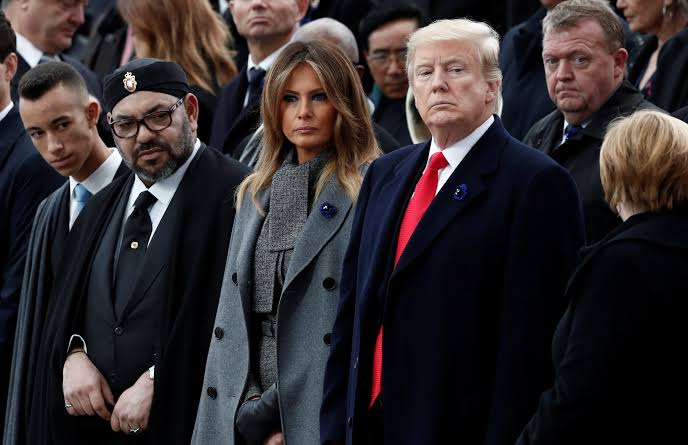
According to the News Agency of Nigeria, Trump restated the position in a message to King Mohammed VI during Morocco’s 27th Throne Day anniversary.
The American president also endorsed Morocco’s autonomy proposal as the only credible framework for ending the decades-long territorial dispute.
“The United States is unequivocal: We recognise Moroccan sovereignty over Western Sahara,” Trump said.
He described Morocco’s autonomy initiative as a serious and realistic basis for reaching a just and lasting settlement.
Trump warned that pursuing a different approach would prolong the conflict and maintain the existing political stalemate.
“Any other path prolongs the status quo and is unacceptable. This dispute must end now,” he said.
He added that the United States would continue supporting efforts to resolve the dispute under the Moroccan proposal.
US Western Sahara policy remains firm
The latest message confirms that Washington has not reversed the position first adopted during Trump’s first administration.
The United States formally recognised Moroccan sovereignty over Western Sahara in December 2020.
That decision marked a significant change in American policy towards one of Africa’s longest-running territorial disputes.
Washington also declared its support for Morocco’s plan to grant the territory limited autonomy under Moroccan sovereignty.
Morocco regards Western Sahara as an integral part of the kingdom and controls most of the territory.
However, the Algeria-backed Polisario Front seeks independence and the creation of a sovereign Sahrawi state.
The United Nations continues to treat Western Sahara as a Non-Self-Governing Territory whose final political status remains unresolved.
It has maintained a peacekeeping mission in the territory while encouraging negotiations between the parties.
Trump praises Moroccan leadership
Trump also praised King Mohammed VI for what he described as his contribution to peace and regional stability.
“Your Majesty’s wise leadership is an anchor of stability,” he said.
He commended Morocco’s efforts to combat extremism and protect the security interests of both Moroccan and American citizens.
Trump described the relationship between both countries as a valuable partnership built on security cooperation and shared strategic interests.
He said Washington and Rabat would deepen their cooperation to improve stability across the Sahel region.
Several countries within the Sahel have faced armed insurgencies, military coups and growing political instability in recent years.
Morocco has increasingly presented itself as an important diplomatic, economic and security partner in addressing those challenges.
US promises stronger economic cooperation
Trump also pledged to expand economic cooperation between the United States and Morocco.
He said his administration would encourage economic and social development throughout the kingdom, including in Western Sahara.
The American president identified energy, artificial intelligence, critical minerals and defence as important areas for future cooperation.
He said American technology and innovation could support Morocco’s development plans in those sectors.
“Your vision for economic growth opens new prospects for prosperity for both our peoples and economies,” Trump said.
The pledge could encourage further American investment in areas controlled by Morocco.
However, economic activity in Western Sahara remains politically sensitive because of the unresolved dispute over the territory.
Polisario and its supporters have repeatedly challenged international business activities conducted under Moroccan authority.
Morocco promotes autonomy proposal
Morocco has presented its autonomy proposal as a realistic compromise capable of resolving the dispute.
Under the plan, Western Sahara would manage some local affairs while remaining under Moroccan sovereignty.
Rabat argues that the proposal would preserve its territorial integrity while granting residents meaningful control over local administration.
The Polisario Front rejects the proposal and continues to demand a referendum that includes independence as an option.
Algeria also supports the principle of Sahrawi self-determination and hosts Polisario representatives and refugees.
The dispute has contributed to longstanding tension between Morocco and Algeria, two of North Africa’s most influential countries.
Their disagreement has also complicated regional cooperation on security, migration and economic development.
UN continues diplomatic efforts
The United Nations continues to support negotiations aimed at producing a mutually acceptable political settlement.
Its peacekeeping mission, known as MINURSO, has operated in Western Sahara since 1991.
The mission was established after Morocco and the Polisario Front accepted proposals intended to end their armed conflict.
However, the planned referendum on the territory’s future has never taken place because of disagreements over voter eligibility and the available political options.
Successive United Nations envoys have attempted to revive direct negotiations, but the parties remain divided over the final status of the territory.
Morocco insists that independence should not form part of any future settlement.
Polisario maintains that Sahrawi people must have the opportunity to choose between integration, autonomy and independence.
Trump’s latest message strengthens Morocco’s diplomatic position but does not resolve those differences.
The Royal Office said the statement reflected the depth of the strategic partnership between Morocco and the United States.
It also described the message as further evidence of Washington’s continued support for Rabat’s position on Western Sahara.