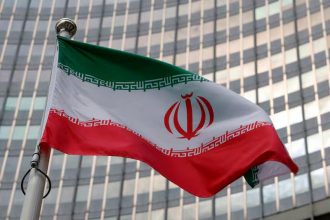
The ongoing US-Israel war on Iran has severely disrupted fertiliser exports from the Persian Gulf, sparking concerns over potential food price spikes if the conflict persists.
Analysts suggest that the supply interruption could increase China’s political leverage over nations already in disputes with Beijing, though they see little likelihood that China would weaponise its fertiliser exports.
Fertiliser prices worldwide have surged since Iran effectively blocked shipments through the Strait of Hormuz, a key route for exports from major Gulf producers such as Saudi Arabia and Qatar.
Since the conflict erupted in late February, urea — the world’s most widely used nitrogen fertiliser — has reportedly jumped from about $400 per tonne to $700.
Southeast Asia is facing particularly acute shortages, with researchers noting that 80 percent of the region’s fertiliser is imported. Indonesia, Vietnam, and the Philippines rank among the largest buyers of Gulf urea and ammonia.
With the first planting season of the year approaching across much of Asia, China could see its strategic influence grow as countries scramble to secure fertiliser.
Noah Gordon, a fellow at the Carnegie Endowment for International Peace’s sustainability, climate, and geopolitics programme, said Asian economies would undoubtedly turn to Beijing as a major supplier if the Iranian conflict continues.
Reports indicate that India has already requested China to reconsider easing export restrictions on urea, as the war has forced some Indian fertiliser plants to halt production.
China initially imposed export limitations in 2021 to safeguard domestic supply. In recent weeks, authorities have reportedly asked exporters to halt shipments of nitrogen-potassium fertiliser blends.
“Countries typically prioritise securing fertiliser suppliers for their farmers above geopolitical objectives,” Gordon said.
“Given how many producers around the world are short of natural gas feedstocks for production of nitrogen-based fertilisers, countries like the Philippines will have to consider importing from China despite tensions over borders or aggressive Chinese behaviour.”
Relations between Beijing and Manila remain tense due to competing territorial claims in the South China Sea, highlighted by heated diplomatic exchanges and maritime confrontations.
Earlier this month, Philippine Agriculture Secretary Francisco Tiu Laurel Jnr said the government was in discussions with major fertiliser producers, including China, to ensure supply stability.
Last week, President Ferdinand Marcos Jnr reassured farmers that the nation had adequate stocks for the upcoming planting season.
“There’s no country that has stopped the sale of fertiliser to us, which is confirmed by China. It’s not a matter of supply. It’s a matter of price,” Tiu Laurel said.
China’s foreign ministry stated last week that Beijing is ready to enhance coordination with Southeast Asian countries to tackle energy security challenges, adding, “while ensuring that domestic demand is met, China exports some of its fertilisers to international markets.”
Lee Jones, a professor of international politics at Queen Mary University of London, said Beijing has repeatedly demonstrated reluctance to bear the economic burden of global or regional hegemony, pointing to its approach to debt crises in developing nations.
He added that China is unlikely to step in to support other countries’ fertiliser supply, emphasizing that Beijing remains “focused on its own interests.”
“China routinely restricts fertiliser exports, prioritising low domestic prices and food security. It is unlikely to sacrifice these objectives to bail out struggling neighbours, especially those it has disputes with, like the Philippines or Japan,” Jones said.
“It is much easier for Beijing to sit back and do nothing, as these countries suffer due to the reckless behaviour of their treaty ally, the United States. It may not make China look great, but it certainly makes the U.S. look bad — and with good reason.”
Beijing has shown some willingness to leverage control over critical supply chains in the past.
In January, Chinese authorities imposed new rare-earth export restrictions on Japan, widely interpreted as retaliation for Japanese leader Sanae Takaichi’s controversial comments on Taiwan.
“If China weaponises fertiliser, it will likely do so quietly,” Gordon said, noting that with existing export restrictions, Beijing could maintain limits and selectively relax them, making shipments appear as gestures of goodwill.
“China would rather make headline-grabbing moves over hi-tech products, like the permanent magnets the U.S. needs for its battery and military production, than over fertiliser” crucial to the Global South, he added.
“Perhaps China will make some high-profile fertiliser deliveries along the lines of the masks and medical supplies it provided during the Covid-19 crisis.
“But China is also dealing with high prices and shortages of fertiliser feedstocks like natural gas and sulphur, so it may only have so much fertiliser to send around for diplomatic benefits.”