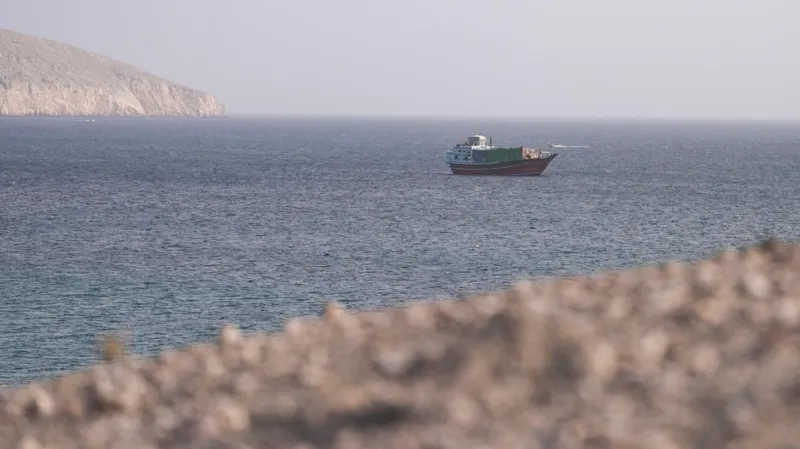
The United States has launched another wave of strikes against Iran, marking the sixth consecutive night of attacks. Both countries continue fighting over control of the Strait of Hormuz.
According to BBC, US Central Command said its forces targeted Iranian military capabilities that threatened commercial vessels using the strategic waterway. However, Iran accused Washington of hitting civilian infrastructure. This included bridges, an airport and a railway station.
The BBC verified an attack on a bridge west of Bandar Abbas in Hormozgan province. Iranian state media also reported strikes near Qeshm Island, Bandar Abbas and Bushehr, which hosts the country’s nuclear power plant.
CENTCOM lists military targets
CENTCOM said aircraft, drones and warships struck dozens of Iranian targets during the operation. It ended in the early hours of Friday.
The US military listed coastal surveillance facilities, air-defence positions, military logistics infrastructure and maritime capabilities among the targets. However, its statement did not mention bridges, airports or railway facilities.
Iranian state media reported that the attacks hit Iranshahr Airport, a railway station in Bandar Khamir and five bridges in the port city. It also reported that the strikes killed seven people. Additionally, separate reports confirmed attacks on transport infrastructure around southern Iran.
Earlier in the week, President Donald Trump threatened to strike Iranian bridges and power plants if Tehran refused to return to negotiations.
The Geneva Conventions protect civilian facilities during armed conflict unless parties use them for military purposes.
UN human rights chief Volker Türk had previously warned that deliberately targeting civilians and essential civilian infrastructure would constitute a war crime.
Iran retaliates against US facilities
Iran said it responded by targeting American military infrastructure in Kuwait and Bahrain.
Earlier, Tehran also claimed responsibility for attacks on US facilities in Jordan, Kuwait and Bahrain. Hostilities have now spread across the region.
Iran’s chief negotiator, Mohammad Bagher Ghalibaf, said the country had no reason to follow an agreement that offered it no benefits.
He also argued that Iran’s security depended on maintaining what he called “Iranian arrangements” in the Strait of Hormuz.
Meanwhile, Iran’s Revolutionary Guard warned that it could disrupt other oil and gas export routes serving the United States and its allies. However, it did not identify the routes it might target.
US enforces blockade on Iranian ports
CENTCOM also said US Marines boarded an oil tanker in the Gulf of Oman. This was part of Washington’s renewed blockade of Iranian ports.
The military added that it redirected three commercial vessels that allegedly tried to breach the blockade.
During an earlier blockade between April 13 and June 18, US forces disabled nine vessels. In addition, they redirected more than 140 others, according to CENTCOM.
Washington lifted that blockade under a preliminary agreement intended to end months of fighting. However, disagreement over the Strait of Hormuz later weakened the arrangement and triggered renewed military action.
Despite the escalation, White House Press Secretary Karoline Leavitt said Trump remained open to diplomacy.
“The president will hold them accountable when they turn their back on the words that they state to the United States. But he is always open to diplomacy at the very same time,” she said.
Leavitt added that Iran had expressed interest in reaching another agreement. However, she said Washington would continue responding to attacks on ships.
The continued closure of the Strait of Hormuz has disrupted tanker traffic and raised concerns about global energy supplies. Before the conflict, the route handled a significant share of the world’s oil and liquefied natural gas shipments.
International Energy Agency chief Fatih Birol warned that prolonged disruption could place global energy markets under greater pressure. This may happen in the coming weeks.