Ghanaian President, John Mahama, has garnered broad support from United Nations members for acknowledging the transatlantic slave trade as a crime against humanity and advocating reparations for African nations.
The resolution he presented on Wednesday at the UN General Assembly in New York received 123 votes in favour, with only three countries—Argentina, Israel, and the United States—opposing it, while 52 nations, predominantly European, including the UK, Portugal, and Spain, abstained.
Mahama urged UN members to “engage in inclusive, good-faith dialogue on reparatory justice, including a full and formal apology,” as well as to implement measures for restitution and compensation.
Highlighting Ghana’s historical role, the president noted that the nation’s ports were central to the centuries-long trade of Africans to the Americas, describing it as the largest forced migration in history.
He also called for the immediate return, without charge, of African art and artifacts, many of which were taken during the colonial era and remain exhibited in Western museums.
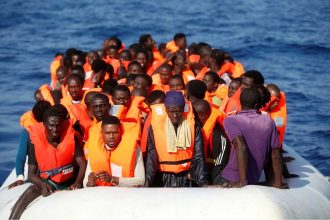
Over a period of roughly 400 years, more than 12 million Africans—primarily from West and Central Africa—were forcibly transported, mostly by European traders, to the Americas.
In the Americas, these enslaved Africans were exploited as cheap labour on cotton, rice, tobacco, and sugar plantations, while in Europe, they often served in domestic roles, maritime work, construction, or as attendants in royal and noble households.
Mahama emphasized that more than 200 years after the abolition of the slave trade, its enduring effects, compounded by colonialism, continue to “cause immense suffering, cultural disruption, economic exploitation, emotional trauma and unending discrimination endured by Africans.”