The United Nations General Assembly has adopted a declaration aimed at strengthening global pandemic preparedness despite opposition from the United States and two other countries, marking a significant step toward a UN pandemic declaration.
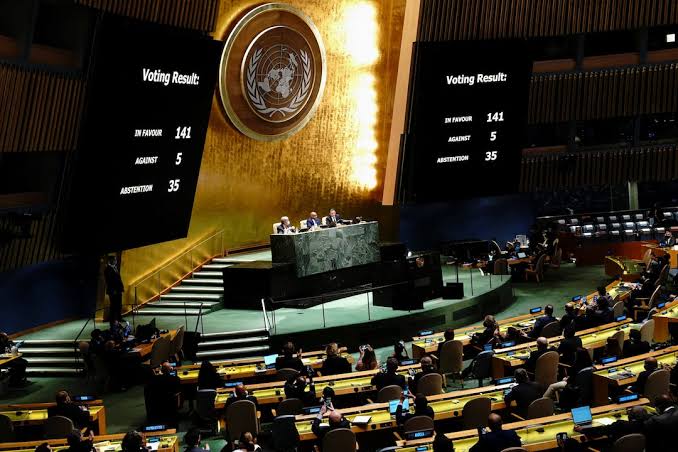
According to AFP, 153 countries voted in favour of the political declaration on Monday, while three voted against it and two abstained. This outcome highlights the broad international support for a UN pandemic declaration.
The United States, Argentina and Israel opposed the measure, while New Zealand and Paraguay abstained.
The declaration seeks stronger international cooperation in preventing and responding to future pandemics, as outlined in the UN pandemic declaration text.
UN outlines pandemic preparedness commitments
The agreement encourages countries to improve disease surveillance, strengthen healthcare systems and ensure fair access to medical resources during public health emergencies.
It also recognises the World Health Organisation’s Pandemic Agreement adopted in 2025.
WHO Director-General Tedros Adhanom Ghebreyesus welcomed the decision and encouraged countries to honour their commitments.
“The world has come a long way since COVID-19,” he said.
The declaration was initially expected to receive unanimous support during a high-level meeting in September. Importantly, the UN pandemic declaration process was delayed by several objections.
However, objections from the United States and other countries prevented its adoption by consensus.
The matter subsequently returned to the General Assembly for a formal vote.
Unlike decisions made by the UN Security Council, General Assembly resolutions cannot be blocked by a permanent member’s veto.
The declaration is politically significant but does not automatically create legally binding obligations for participating countries.
WHO officials also urged governments to conclude negotiations on sharing disease samples and ensuring equitable access to vaccines and treatments.
Those negotiations remain an important outstanding element of the broader Pandemic Agreement.