

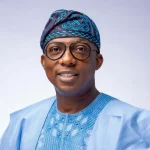


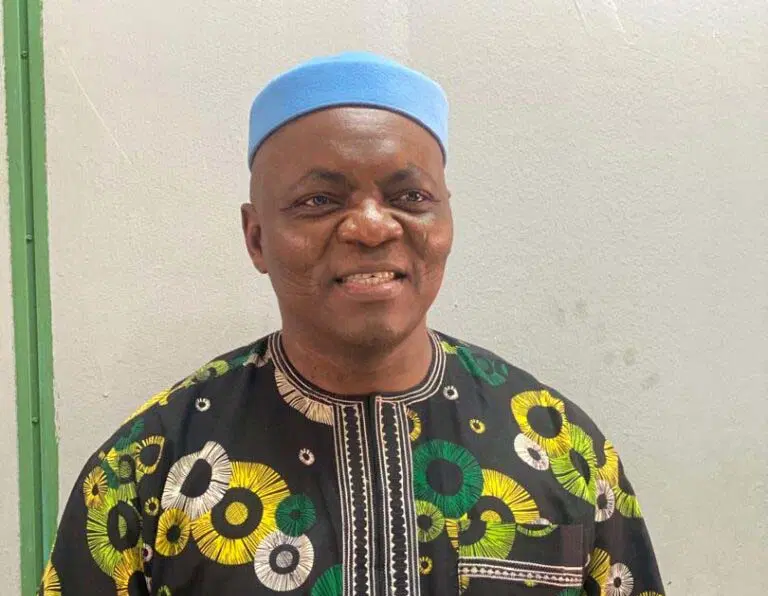
The Director-General of the Nigeria Natural Medicine Development Agency, Prof. Martins Emeje, has stated that traditional medicine should no longer be described as alternative medicine, insisting that it remains the primary form of healthcare for most people worldwide.
Emeje spoke during an interview on ARISE News on Sunday while reacting to his appointment to the World Health Organisation Advisory Group on Traditional Medicine.
He described the appointment as a major achievement for Nigeria, Africa and global healthcare, noting that it showed growing international recognition of the country’s work in natural medicine development.
“The appointment is highly significant, not just for me, but for my country and my continent. It confirms that the work we have been doing in the last two years is gaining global attention,” he said.
Emeje said his inclusion in the WHO advisory structure was historic, adding that it was the first time a Black African had been appointed to the body on traditional medicine.
According to him, the continued description of natural medicine as alternative medicine does not reflect reality, especially in developing countries.
“We should stop calling natural medicine alternative medicine. This is what the majority of our people use,” he said.
The NNMDA boss admitted that Nigeria was yet to fully benefit economically from traditional medicine but explained that the challenge was not unique to the country.
He said poor funding was a major issue globally, despite the wide use of natural medicine.
“You use money to look for money. Even though most of the world uses traditional medicine, less than one per cent of research funding goes into it. That imbalance explains why we are not generating enough evidence, patents or foreign exchange from this sector,” Emeje stated.
He revealed that boosting funding for research would be a key focus of the WHO Advisory Group’s 2026 to 2027 work plan.
According to him, the plan would also focus on stronger regulation, evidence generation and proper integration of traditional medicine into national healthcare systems.
Reacting to concerns over safety and effectiveness, Emeje dismissed claims that traditional medicine lacks scientific backing.
“People who say there is no evidence of safety or efficacy are talking about what they do not understand. Which school of traditional medicine did they attend?” he asked.
He disclosed that the NNMDA had established Nigeria’s first School of Traditional Medicine to train practitioners, pharmacists and researchers.
“There are schools of traditional medicine across the globe, and in the last two years, we have started one in Nigeria at NNMDA,” he said.
Emeje also blamed negative attitudes towards traditional medicine on what he described as a colonial mindset.
“It is colonialism that makes us look down on our own systems. In my village, the man treating people locally may be more important than an English-speaking professor,” he said, adding that he proudly sees himself as a “DG Babalao”.
He further disclosed that the agency had begun the first nationwide digital documentation of traditional medical practitioners, their methods and products.
“We must have data. Just as pharmacists have registration numbers, traditional medical practitioners must also be documented and numbered,” he said, noting that the project started about eight months ago.
Emeje said more than 16 professors of medicine and over 23 institutions were currently working with NNMDA in a multidisciplinary approach involving doctors, pharmacists, chemists and anthropologists.
“There is no way to do good scientific research without collaboration. Natural medicine requires multidisciplinary input,” he said.
He added that new research protocols tailored specifically to traditional medicine were being developed to ensure quality, safety and effectiveness.
“Quality simply means that what you have produces the desired outcome consistently and safely. That is exactly what we are working towards,” Emeje said.
The NNMDA boss expressed hope that Nigeria’s growing role at the WHO would lead to stronger support at home, noting that the House of Representatives had already passed a resolution calling for the prioritisation of natural medicine.
“Charity begins at home. What we are doing locally is being watched globally. Nigeria must not be put to shame,” he said.
Emeje concluded that integrating traditional medicine into Nigeria’s healthcare system was key to improving access for rural communities and positioning the country as a global leader in natural medicine development.


