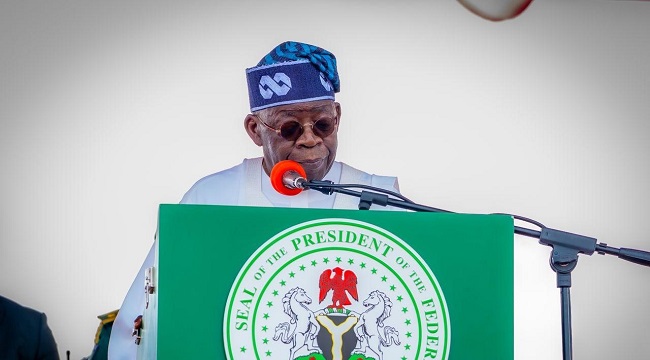
President Bola Tinubu has unveiled five integrated social intervention and development programmes valued at about $3.05 billion to tackle poverty, improve healthcare delivery, strengthen education and provide support for vulnerable communities across Nigeria.
The initiatives comprise the Nigeria Community Action for Resilience and Economic Stimulus Additional Financing (NG-CARES), the Solutions for Internally Displaced Persons and Host Communities (SOLID) programme, and the Human Capital Opportunities for Prosperity and Equity (HOPE) package, which consists of HOPE Gov, HOPE PHC and HOPE Edu.
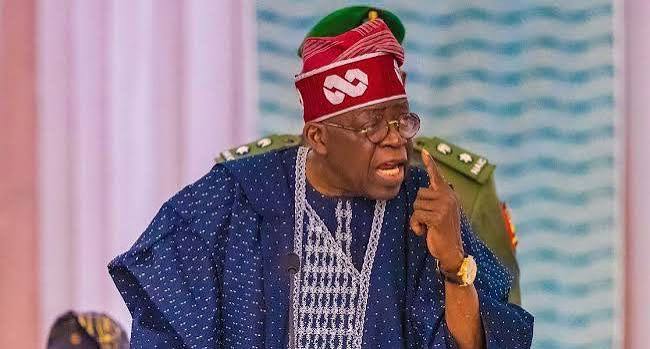
Represented at the launch by the Minister of Finance and Coordinating Minister of the Economy, Taiwo Oyedele, the President said the interventions were designed to ensure that the gains of the administration’s economic reforms translate into tangible benefits for Nigerians at the grassroots.
“This is not just a set of programmes; these are promises kept. On our Renewed Hope Agenda, we came into office pledging to reform our economy, secure the nation, and invest in our people. Today, we act on that pledge; protecting the vulnerable, empowering communities, and building the human capital that will carry Nigeria forward,” the President said.
Tinubu disclosed that NG-CARES would receive approximately $1.25 billion in additional financing from the World Bank to support smallholder farmers and small businesses, while the SOLID programme would benefit from $300 million to assist internally displaced persons and their host communities.
He further explained that the remaining $1.5 billion under the HOPE package would be deployed to strengthen governance, enhance primary healthcare services, improve education and support teachers nationwide.
According to the President, “These five programmes are not separate efforts. They are one coordinated national strategy for poverty reduction, human capital development and community resilience. Livelihoods, healthcare, education, social protection, and support for displaced communities reinforce one another where it matters most – at the grassroots.”
Minister of Budget and Economic Planning, Atiku Bagudu, described the interventions as a comprehensive response by the Federal Government to the increasing cost of living and rising poverty.
He said, “These programmes have been carefully designed as strategic programs to reduce the impacts of the cost-of-living crisis that the world is witnessing, particularly as a result of the downstream challenges of the Ukraine-Russia war as well as the Middle East war, which have affected energy prices.”
The Minister of Health and Coordinating Minister of Social Welfare, Prof. Muhammad Ali Pate, said the HOPE PHC programme would expand access to quality healthcare for about 40 million Nigerians. He revealed that over 3,000 primary healthcare centres had already been upgraded to Level 2 status, while another 1,000 facilities were nearing completion. He also noted that more than 69,000 frontline health workers had been trained.
Speaking on the education component, Minister of Education Tunji Alausa said the HOPE Edu programme would reach nearly 30 million children across the 36 states and the Federal Capital Territory through support for 65,000 public schools and 500,000 teachers.
“Education remains the biggest investment any responsible government can make for its citizens. And this is where the president is doing exactly that,” he said.
Minister of Humanitarian Affairs and Poverty Reduction, Dr. Bernard Doro, said the programmes reflected the administration’s commitment to ensuring that every Nigerian benefits from government interventions.
The minister said the initiatives demonstrated that “no Nigerian, however remote or displaced, is beyond the reach of this government’s care.”
The launch followed a recent World Bank report indicating that although Nigeria’s economic indicators have improved since the implementation of Tinubu’s reforms, about 79 per cent of the population remains poor or vulnerable to poverty.
While acknowledging that the reforms had enhanced macroeconomic stability, the World Bank noted that the impact had yet to significantly improve living conditions for most Nigerians, stressing that sustained job creation and stronger social protection measures are critical to reducing poverty nationwide.