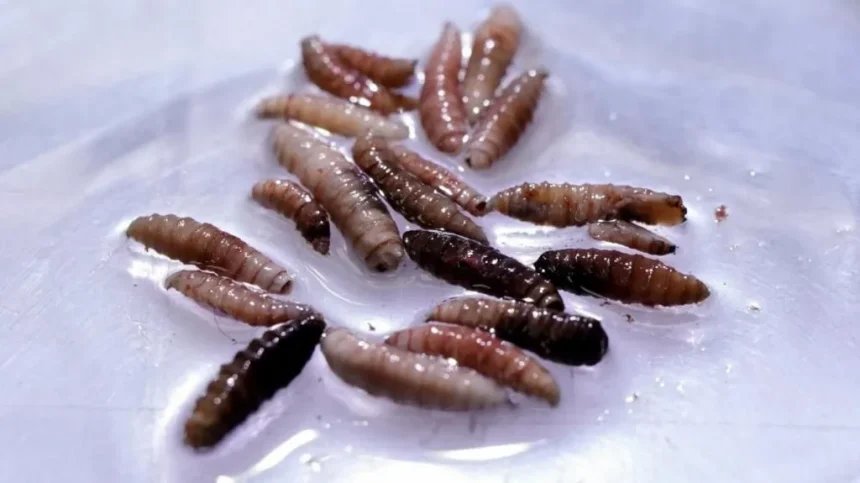
Superworms, the larval stage of a beetle commonly sold as pet food, could provide an efficient and safer method for cleaning animal skeletons, according to a new study published in PLOS One.
The research was led by Fatemeh Rastekar of Ferdowsi University of Mashhad, Iran, alongside fellow researchers.
Cleaned animal skeletons play a vital role in scientific research, museum collections and education.
While several techniques are currently used to remove soft tissue—including burial, enzymatic digestion, chemical treatments and dermestid beetles—each comes with limitations, such as the potential to damage bones or expose handlers to hazardous materials.
The researchers examined whether superworm larvae could serve as a reliable alternative.
To assess their effectiveness, the team introduced varying quantities of superworms to eight animal specimens ranging from a 9-gram Egyptian rousette bat to a 4.2-kilogram wolf.
Depending on the size of the specimen, the larvae stripped away flesh within hours to several days, cleaning both external and internal surfaces of the skeletons.
The study found that using between 10 and 15 grams of superworms for every gram of animal specimen achieved the best results, reducing cleaning time while preventing damage to the bones. At this ratio, the larvae successfully cleaned even fragile bird skulls without causing any skeletal harm.
According to the researchers, superworms present a practical alternative to traditional skeleton-cleaning methods. Unlike chemical processes, they require no hazardous substances, and because crowded superworms do not readily metamorphose into adult beetles, they pose a lower risk of pest outbreaks than dermestid beetles. The larvae are also widely available through commercial breeders that supply them as feed for pets and livestock.
The authors state, “Our study shows that protein-rich superworms, a common pet food that is easy to maintain in colonies, can safely and efficiently clean skeletons for museum specimens. Unlike traditional chemical methods or dermestid beetle colonies, this approach preserves delicate bones, is environmentally friendly, safer for museum collections by minimizing the risk of pest infestation and makes colony maintenance much easier for museums.”