




Super Falcons head coach Justin Madugu has issued a heartfelt apology to Nigerians after the team failed to qualify for the 2027 Women’s World Cup, following a 2-1 defeat to South Africa in the playoff match.
Nigeria lost to Banyana Banyana after a goalless first half, with Thembi Kgatlana and Refiloe Jane scoring for South Africa. Christy Ucheibe pulled one back from the penalty spot, but her goal was not enough to send the record 10-time African champions through to the World Cup.
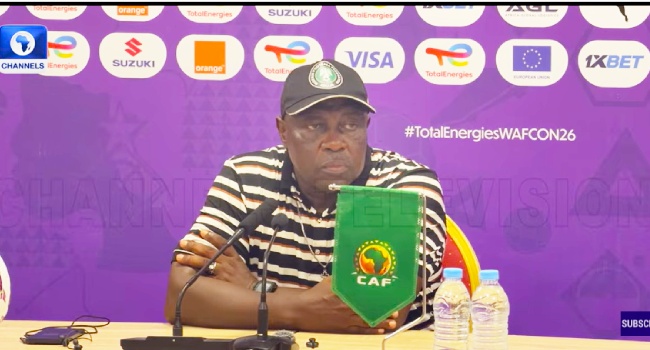
Speaking after the match, Madugu accepted full responsibility for the outcome, which ended Nigeria’s World Cup dreams.
“I am very sorry,” the Adamawa-born coach said during a post-match interview. “We came, did the best that we could, but our best was not good enough, and we’re very sorry for that, and we take full responsibility for everything that happened.”
Madugu said the team approached the game determined to win but were punished for failing to convert their chances and for making costly defensive errors.
“We had chances. Still, the conversion was another problem, and we made some little errors at the back. They capitalised on that, and they got the goals,” he said.
The coach attributed the defensive problems to poor decision-making and lapses in concentration rather than sustained pressure from the opposition.
“We had the game under control,” Madugu said. “Momentary loss of concentration and then trying to do something that was unnecessary always results in the kind of goals that we tend to concede.”
He admitted that repeated defensive lapses had become a major concern, especially for a team that has traditionally been difficult to score against.
“All of a sudden, I don’t know, it could be complacency, it could also be, you know, sort of overconfidence, and then we end up making mistakes,” he said.
The coach also acknowledged that Nigeria’s inability to finish chances proved costly.
“We have not been clinical. We create several chances, but we are very wasteful with the opportunities that always come our way,” Madugu added. “This was a game we would have finished in the first half, based on the opportunities that we had, but we couldn’t utilise them.”
He noted that South Africa had fewer opportunities but were more clinical in converting them.
“How many chances did South Africa get? But because they were more clinical, they converted the chances that came their way. Today, they are the ones that won the match,” he said.
On his tactical decisions and substitutions, Madugu defended the changes made during the game, explaining that some were forced by injuries. He revealed that Deborah Abiodun had been playing through pain and repeatedly signalled that she needed to be substituted.
“She was in pain and kept giving signals that she wants to go out,” he said, adding that the player had to be protected to avoid worsening the injury.
Addressing calls for his dismissal on social media, Madugu said he understood the anger and disappointment among Nigerians.
“It’s within their right because I can understand the pains that everybody is going through,” he said.
Madugu added that he was prepared to accept whatever decision the football authorities eventually make about his future.
“As a coach, you must always live with the consequences of whatever it is that comes your way. I am not afraid of being sacked,” he said.
He pointed to his record with the team, having managed almost 28 matches, winning 19, losing four and drawing four. However, he acknowledged that the timing of defeats mattered, particularly when they came at crucial stages.
“Nigerians… you are always judged as a coach based on your last result,” Madugu said.
Despite the disappointment, Madugu maintained that the team had prepared extensively and analysed their opponents before the match. He said the Falcons had a clear game plan but failed to consistently execute it, with anxiety and individual mistakes ultimately proving costly.
With the World Cup dream now over, Madugu accepted that the team must learn from the painful outcome.
“If our best is not good enough, it’s not for me to decide what happens,” he said, while thanking Nigerians for the opportunity to lead the national team.