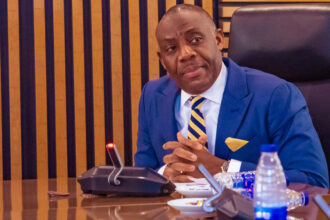




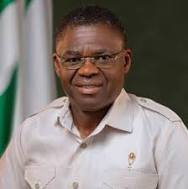
Director General of the Nigeria Institute for Sports, Phillip Shaibu, has said the institution’s decision to decentralise its operations is aimed at strengthening its capacity to produce world-class athletes and coaches across the country.
Shaibu, a former deputy governor of Edo State, also outlined plans to position Nigeria among the leading nations in long-distance running at major international competitions.
Speaking after announcing NIS scholarships for the top Nigerian finishers and their coaches at the Okpekpe International 10km Road Race over the weekend, Shaibu expressed confidence in Nigeria’s ability to produce elite road runners. He noted that the country possesses the necessary talent pool and that a structured development programme, supported by the right environment, would unlock the potential of local athletes.
He said: “Since I came in, we have been able to expand the NIS. We now have zonal offices in all six local zones in Nigeria.
“We have the South-South Zone in Benin; we have the North-Central Zone in Jos, the South East in Enugu, South-West in Abeokuta, the North West in Kaduna and the North East in Adamawa.”
According to Shaibu, the first three Nigerian finishers at the Okpekpe Road Race, all from Plateau State, have been awarded scholarships alongside their coaches. He explained that the initiative forms part of a 10-year strategic roadmap embedded within the athlete development unit of the institute.
“The Abuja office is the athlete development centre, and these athletes will constitute the first set in the unit.
“As I have always said, Nigeria has no business in celebrating bronze or silver in the Olympics if we actually prepare these young ones properly.
“The target I’ve given them is that at next year’s Okpekpe Race, the dollar has to be shared. Some of them will remain in Nigeria, if not all. They can’t be coming here and taking our dollars. That will stop soon.”
The NIS chief disclosed that the institute plans to engage the parents of the selected athletes to explain its development programme and secure assurances that the beneficiaries will combine sports with their education.
“We must have an agreement with their parents, and other issues will be taken care of by NIS.
“Don’t forget that I took over many players while I was deputy governor of Edo State. I told you the story of Imade Osarenkhoe, whom I picked after watching him in a novelty match.
“I ensured that he went to the University of Benin, graduated as an engineer and for two seasons, he was the top scorer in NPFL. He is now playing outside the country.
“I was watching one of my girls the other day in Roma as they beat Juventus.
“What we will do is go to the grassroots, pick promising athletes, talk to their parents and groom them into stars.”
Shaibu acknowledged that the institute had encountered several challenges since embarking on reforms and restructuring efforts. However, he credited the support of President Bola Tinubu for helping the management overcome the obstacles.
“Some people are struggling to hold onto what they don’t have expertise in. The NIS is the only agency in sports that deals with the training of athletes, training of manpower for the sport ecosystem, training of coaches and even referees.
“Our offices are technically structured for these programmes.”