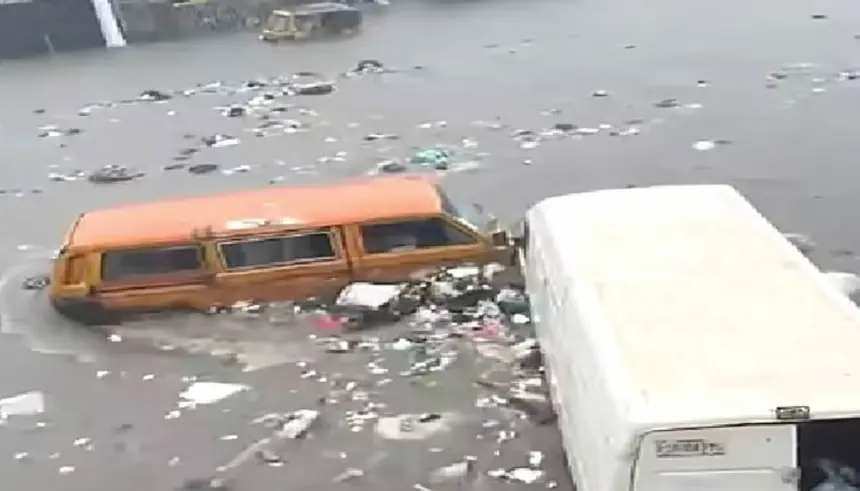
Rescue teams in Nepal and China intensified efforts today to reach survivors and evacuate people stranded by devastating flash floods that have killed more than 500 people across the two countries.
Helicopters were deployed alongside ground rescue operations as authorities continued to search for those still trapped or missing.
Nepal’s disaster management authority reported that the number of confirmed deaths had climbed to 538, while police later revised the figure to 547.
More than 3,700 people have so far been rescued as emergency teams work across the worst-affected areas.
In China, five deaths had been recorded, while 558 people remained missing. Nepal was also searching for 977 people whose whereabouts were unknown, including more than 500 foreigners who were in the region for work, trekking or pilgrimage.
Nepali police issued another warning after receiving reports that a dam on the Tibet side had collapsed. Rescue personnel were instructed to remain on heightened alert as authorities prepared for the possibility of additional flooding.
The warning came after officials had already cautioned residents and rescue workers about the threat posed by a barrier lake created following the first wave of flooding. The expanding body of water raised concerns that another breach could worsen conditions in already devastated communities.
Around 680 rescuers eventually made their way into the severely affected Gyirong area, travelling by foot and raft, while some personnel were delivered by drones. The operation remained challenging because of damaged infrastructure, unstable terrain and continuing flood risks.
In Nepal, army personnel were also working to rescue people believed to be trapped inside a hydropower tunnel in Rasuwa. Brigadier General Raja Ram Basnet described the operation as difficult, saying: “It is complicated to find the entry and exit points of the tunnel because everything has been covered by mud.
“Our first priority is rescuing the stranded people.”
The Chinese embassy in Nepal said rescue and search efforts had reached a “critical stage” as teams continued looking for survivors. It also warned that the lake was “currently at a high water level and has begun to overflow, posing a risk of further breach.”
Scientists examining satellite imagery said the disaster may have been triggered when bedrock beneath a Himalayan glacier collapsed. The collapse reportedly caused a magnitude 5.2 rockfall, sending large volumes of water through rivers and destroying buildings and bridges across parts of Tibet and Nepal.
Karbir Gaire, a customs officer who survived the disaster in Timure near the Chinese border, described the moments before the flood struck. He said: “Right after the shake, I noticed a black storm coming towards us.
“We all immediately started running out, and within a few seconds, we were climbing uphill on the opposite side of our office building.
“I think those 10 or so seconds saved some of us.”
Gaire said 15 of his colleagues were still missing as rescue operations continued in the area.
Rajan Tamang, who owns a restaurant in New York, said the disaster had claimed the lives of his mother and sister. Recalling the sudden onset of the flooding, he said: “My family was just waking up, and they didn’t even get any information, and suddenly this flood came,” he said.