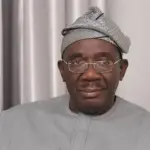



The Minister of Marine and Blue Economy, Adegboyega Oyetola, has called for increased sustainable financing and stronger partnerships to drive Nigeria’s expanding blue economy agenda.
Speaking at the 3rd Stakeholders’ Forum held in Lagos on Thursday, Oyetola revealed that interventions in marine infrastructure had contributed to an 18.6 per cent increase in non-oil exports during the first half of 2025, highlighting the sector’s transformative potential.
He described the Federal Executive Council’s approval of Nigeria’s first National Policy on Marine and Blue Economy in May as a landmark development for national growth. However, he emphasised that implementing the policy would require collective action and substantial investment in key areas such as port modernisation, aquaculture expansion, maritime security, and resilient coastal infrastructure.
“Finance is the catalyst that transforms policy into progress,” the minister stated, calling on investors, development partners, and international financiers to align with Nigeria’s blue economy vision.
Among the government’s priorities, Oyetola listed maintaining Nigeria’s record of zero piracy incidents in the Gulf of Guinea, scaling up fisheries production, and unlocking opportunities in marine tourism and coastal infrastructure development.
He also pointed to recent achievements, including a three-year zero-piracy milestone attributed to the Deep Blue Project and the ongoing rehabilitation of Lagos ports. He urged stakeholders to fund marine research, renewable energy, and environmental resilience through innovative financing tools such as blue bonds and sustainability-linked loans.
Permanent Secretary at the Ministry, Olufemi Oloruntola, noted that targeted public investment and stronger institutions are essential for sustained growth in the sector.
Director of Planning, Research, and Statistics, Ralthum Ibrahim, described the forum as a timely initiative to deepen dialogue and mobilise resources for effective policy implementation. She said the ministry had developed a monitoring framework to track activities across ports, aquaculture, fisheries, and marine tourism, ensuring accountability.
Also speaking at the forum, former Minister of Interior, Emmanuel Iheanacho, commended the ministry’s progress and emphasised the vast potential of the blue economy to drive national prosperity and sustainable development for future generations.
The event gathered government officials, industry leaders, civil society groups, academics, and community representatives, all of whom reaffirmed their commitment to advancing Nigeria’s maritime sector.