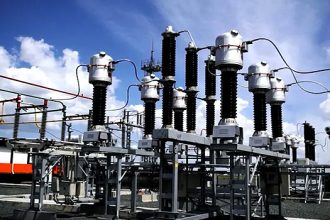
Oil prices rose again on Tuesday as Iran launched fresh attacks on crude-producing neighbours, targeting key energy infrastructure and heightening concerns about global supply disruptions .
International benchmark Brent North Sea crude climbed 2.0 percent to $102.16 per barrel, while the main US oil contract West Texas Intermediate gained 1.7 percent to $95.08 per barrel .
A new drone strike on Tuesday hit the Fujairah oil complex in the United Arab Emirates, which sits on the Gulf of Oman and enables the country to bypass the Strait of Hormuz for some exports. The attack triggered a fire at the key Emirati oil port, though officials reported no injuries .
Two drones also targeted a major southern Iraqi oil field, an oil ministry spokesperson told AFP, marking the second attack in four days .
Meanwhile, Israel said it had killed Iran’s national security chief as it launched a “wide-scale wave of strikes” in Tehran, alongside attacks on Hezbollah in Beirut .
Kathleen Brooks, research director at trading group XTB, noted that concerns are “shifting from a shipping crisis caused by the closure of the Strait of Hormuz to an oil supply crisis, where energy infrastructure across the Gulf is a target” .
In a televised interview Tuesday, Iranian parliamentary speaker Mohammad Baqer Qalibaf warned that “the Strait of Hormuz cannot be the same as before and return to its previous conditions,” adding that “there is no longer any security” .
Dan Coatsworth, head of markets at AJ Bell, said, “The longer the oil price stays above $100 per barrel, the louder the alarm bells for the market over inflation risks” .
Despite the geopolitical tensions, stock markets mostly gained as investors weighed other positive factors. US chip titan Nvidia said it expected to make at least $1 trillion in revenue through the end of 2027, and several airlines reported better-than-expected revenue in the first quarter .
The three main US indices opened higher, while most major European bourses were also in the green in mid-afternoon trading. Delta Airlines and American Airline were up almost five percent .
US President Donald Trump has called for allies in Europe and elsewhere to help reopen the Strait of Hormuz, saying at the weekend that securing the waterway “should have always been a team effort, and now it will be” .
However, the response has been lukewarm. German Chancellor Friedrich Merz said the war started by US-Israeli strikes on Iran was “not a matter for NATO,” while Britain, Spain, Poland, Greece and Sweden all distanced themselves from the calls .
The European Union decided against expanding its naval operations in the Middle East following a meeting of foreign ministers. “Europe has no interest in an open-ended war,” Kaja Kallas, the EU’s top diplomat, told journalists in Brussels .
The International Energy Agency said its member countries are able to release further emergency oil stocks if needed, on top of the 400 million barrels that will start flowing to global markets this week. However, IEA Executive Director Fatih Birol cautioned that while stock releases can provide a buffer, “the single most important thing for a return to stable flows of oil and gas is a resumption of transit through the Strait of Hormuz” .