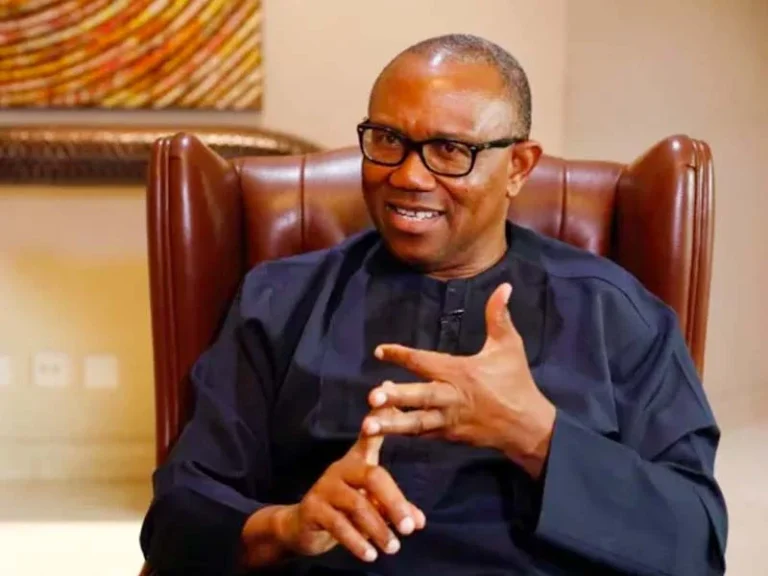
Presidential candidate of the National Democratic Congress, Peter Obi, has disclosed details of his recent meeting with the Swiss Ambassador to Nigeria, Patrick Egloff, saying their discussions centred on strengthening development partnerships and advancing Nigeria’s growth through investments in education, healthcare and poverty reduction.
The former Anambra State governor made this known in a post on X, where he described the engagement as productive.
According to him, the meeting focused on Nigeria’s development trajectory and the need for greater collaboration in sectors that have a direct impact on the wellbeing of citizens.
“Yesterday, I met with the Swiss Ambassador to Nigeria, Mr. Patrick Egloff, and we had a productive and engaging discussion on our country’s developmental journey, with particular emphasis on the critical sectors that drive development: education, healthcare, and lifting people out of poverty,” Obi wrote.
Obi also commended the Swiss Confederation for its sustained contributions to Nigeria, particularly through initiatives supporting economic development, cultural exchange, humanitarian assistance and peace-building efforts in the North-East.
“I expressed my gratitude for the invaluable contributions of the Swiss Confederation to Nigeria’s development, especially its support for critical economic, cultural, humanitarian, and peace-building initiatives, particularly in the North-East,” he said.
He maintained that expanding international partnerships built on shared values and a commitment to human development remains crucial to achieving national progress and inclusiveness.
“Building stronger partnerships founded on shared values and a commitment to human development remains essential to creating a more prosperous and inclusive Nigeria. A New Nigeria is POssible,” he added.
The meeting with the Swiss envoy came about a week after Obi attended a high-level roundtable in Berlin, Germany, at the invitation of the European Council on Foreign Relations (ECFR). The event, themed “Nigeria in 2027 and Beyond,” brought together policymakers, diplomats, development experts, business leaders, representatives of international organisations and members of the international media to examine the country’s future beyond the next general election.
According to Obi, the discussions explored Nigeria’s democratic development after 2027, international relations, development cooperation and strategies for strengthening bilateral partnerships capable of driving economic growth and improving citizens’ welfare.
“Our discussions centred on Nigeria’s democratic journey beyond 2027, international affairs, development cooperation, and the need to strengthen bilateral partnerships that can accelerate economic growth and improve the lives of our people,” he wrote after the meeting.
He noted that participants also considered ways Nigeria could deepen collaboration with global partners to support small and medium-sized enterprises (SMEs), describing them as the backbone of productive economies. Other issues discussed included strengthening democratic institutions, expanding trade and investment, promoting regional stability, improving governance and creating an environment that inspires confidence among citizens, investors and international partners.
Obi said he was encouraged by the level of interest demonstrated at the event, noting that the participation of senior officials from the German Federal Government, development agencies, business associations, policy institutes, foundations, international organisations and global media organisations underscored Nigeria’s strategic importance and the global attention on its socio-economic challenges.
During the discussions, Obi reiterated that Nigeria possesses the human and natural resources required to become a prosperous and globally competitive nation, provided it is led by capable and accountable leaders.
“What is required is competent, accountable, and compassionate leadership that prioritises investment in people, education, healthcare, productive enterprise, the rule of law, and strong institutions over politics of consumption,” he said.
He further expressed confidence that with good governance, fiscal discipline and productive international partnerships, Nigeria could transition “from consumption to production, from poverty to prosperity, and from division to unity.”
Obi also appreciated the European Council on Foreign Relations for the invitation, describing the engagement as an important platform for promoting international cooperation and fostering enduring partnerships.
“I sincerely thank the European Council on Foreign Relations for the invitation and all participants for a frank, engaging, and constructive exchange of ideas. Conversations such as these remain vital in fostering mutual understanding, strengthening international cooperation, and building enduring partnerships for the benefit of Nigeria, Africa, and the global community,” he said.
Obi is expected to contest the January 2027 presidential election alongside President Bola Tinubu of the All Progressives Congress, former Vice President Atiku Abubakar of the African Democratic Congress and other aspirants.