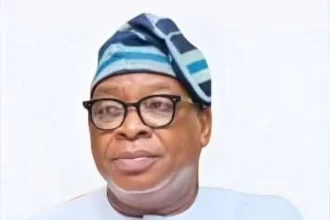
The New Nigeria People’s Party has condemned a proposed United States bill that seeks to impose sanctions, including a visa ban and asset freeze, on its national leader and former Kano State Governor, Rabiu Kwankwaso.
The bill, titled ‘Nigeria Religious Freedom and Accountability Act of 2026’, was introduced on Tuesday by five Republican lawmakers: Chris Smith, Riley Moore, Brian Mast, Mario Diaz-Balart, and Bill Huizenga. It also lists the Miyetti Allah Cattle Breeders Association of Nigeria (MACBAN) and Miyetti Allah Kautal Hore among entities targeted for sanctions.
Speaking on Channels Television’s Sunrise Daily on Friday, the NNPP Campaign Secretary, Folashade Aliu, described the bill as malicious and unjust for singling out one individual.
“How can anybody in their right senses put up a bill that is as important as talking about religion and terrorism and single out one individual in this country?” Aliu questioned.
She maintained that there is no evidence linking Kwankwaso to any extremist group. “There is no evidence that it’s aligned to this group. They have not seen anything. If you cannot do anything but find an individual, that tells you how malicious this whole arrangement is,” she stated.
The proposed legislation would compel the US Secretary of State to submit a comprehensive report on efforts to address religious persecution in Nigeria and require the Departments of State and Treasury to impose sanctions on individuals or entities responsible for severe religious freedom violations.
The Kwankwasiyya Movement also rejected the bill, describing the allegations as “unfounded” and “politically motivated.” In a statement, spokesperson Habibu Sale Mohammed said, “We state unequivocally that these allegations are consistent with nothing in the verifiable public record of Senator Kwankwaso’s life and service.”
The group addressed claims linking Kwankwaso to religious extremism due to Sharia implementation during his tenure, arguing that Sharia-based legal systems in Northern Nigeria were constitutional developments not unique to Kano State.
“To single out Senator Kwankwaso while similar constitutional arrangements exist in several states raises serious questions about the evidentiary standard behind such a recommendation,” the statement read.