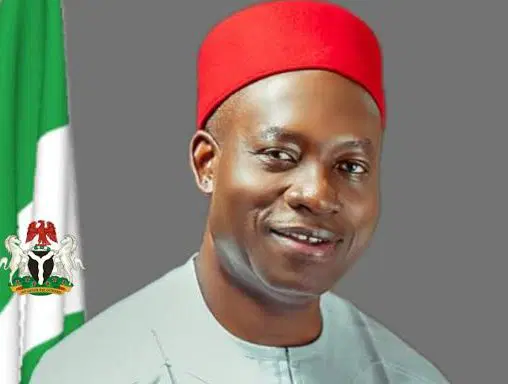
Nigeria’s Permanent Representative to the African Union, Nasir Aminu, has stressed that lasting peace across Africa must be built on local ownership and regional cooperation, warning that solutions imposed from outside cannot guarantee sustainable stability.
Mr Aminu stated this on Wednesday during a high-level dialogue on strengthening collaboration between the African Union Peace and Security Council and the United Nations Peacebuilding Commission. He emphasised that effective peacebuilding required international assistance to complement national priorities and regional realities rather than dictate the direction of interventions.
“If there is one lesson Africa has learned from decades of prevention, peacemaking, and peacebuilding, it’s that peace cannot be imported,” he declared.
The Nigerian envoy argued that sustainable peace depended on stronger links among national governments, subregional bodies, continental institutions and international partners. He cautioned that when these actors pursued separate approaches without adequate coordination, their interventions risked overlapping, delivering contradictory recommendations and failing to address the actual needs of communities affected by conflict.
Highlighting the security situation in West Africa, Mr Aminu pointed to political transitions, terrorism, violent extremism, organised crime and humanitarian emergencies as challenges requiring joint action. He referenced the Multinational Joint Task Force operating in the Lake Chad Basin as an illustration of how regional partnerships could contribute to security operations and stabilisation efforts.
He nevertheless warned that security gains achieved through military operations would remain fragile without improvements in governance, economic opportunities, reconciliation and the restoration of essential public services. Turning to the Great Lakes region, the ambassador identified the activities of armed groups, illicit natural resource exploitation and a lack of trust among regional actors as persistent obstacles to lasting peace.
Mr Aminu further maintained that peacebuilding should not be treated solely as a post-conflict exercise, insisting that preventive measures must be introduced before tensions develop into full-scale crises and sustained through political transitions and recovery processes. He called on the African Union (AU), the United Nations (UN) and regional economic communities to align their political, technical and financial assistance with priorities established by the countries concerned.
He identified mediation, transitional justice, stronger institutions and reliable long-term financing as critical components of an effective peacebuilding framework. According to him, closer engagement between the AU Peace and Security Council and the UN Peacebuilding Commission would help combine African political leadership with the international resources and expertise needed to support recovery and prevent renewed conflict.
The envoy also urged both institutions to move beyond their predominantly annual engagements by establishing more regular channels of communication and cooperation. He called for joint assessments, better-defined regional priorities and effective monitoring arrangements to ensure that agreed decisions resulted in tangible outcomes.
On institutional reforms, Mr Aminu said the UN80 reform initiative presented an opportunity to strengthen cooperation and streamline existing processes without establishing additional layers of bureaucracy.
“Africa does not need more layers of coordination. It needs smarter coordination,” he said.
He reiterated that the priority should be to develop practical partnerships capable of identifying emerging threats early, supporting countries through political transitions and building resilient national institutions. Mr Aminu reaffirmed that African leadership must remain central to the formulation of peacebuilding strategies, with interventions tailored to the continent’s varied security conditions, political circumstances and development needs.