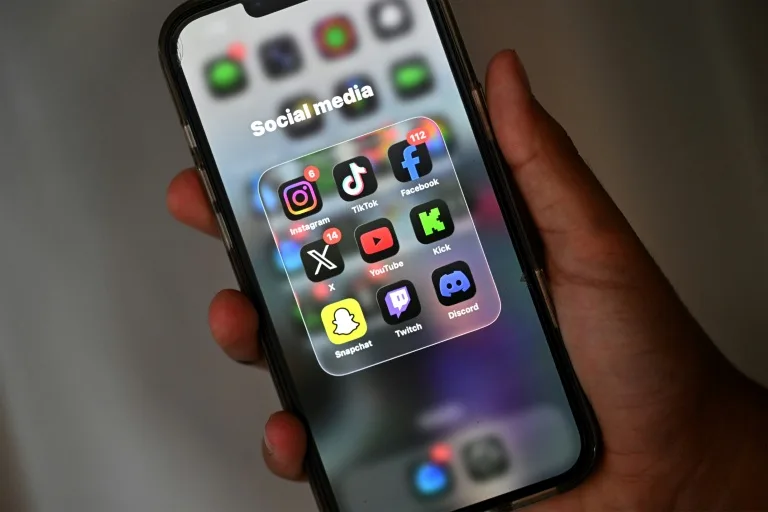
New Zealand has introduced legislation seeking to prevent children under 16 from using social media. In doing so, the country joins a growing international effort to limit young people’s exposure to platforms such as Instagram, TikTok, Snapchat and Facebook.
According to AFP, the proposed Online Safety Bill would require social media companies to verify users’ ages. In addition, it could impose fines worth up to 10 per cent of their global revenue on firms that fail to comply.
Luxon warns of harm to children
Prime Minister Christopher Luxon said the government could no longer ignore the effect excessive social media use was having on young people.
“We simply cannot accept the harm being done to a generation of New Zealand children,” Luxon said.
He said government figures showed that one in three children between the ages of 13 and 17 spends at least five hours each day on social media.
“Social media is exposing them to harmful content, addictive technology and pressures they are not equipped to deal with,” he said.
Luxon added that the effects were being felt across children’s family lives, mental health, sleep and education.
Platforms face tougher age checks
Under the proposed law, platforms including Instagram, TikTok, Snapchat and Facebook would be required to take reasonable steps. Specifically, steps would be taken to ensure users are at least 16.
Companies could use information already linked to accounts, facial age-estimation technology, digital identification services and formal identification documents. These would be used to establish users’ ages.
The platforms would also be required to assess the risks their services pose to children. In addition, they would provide information on measures taken to reduce those dangers.
Education Minister Erica Stanford stressed that responsibility would fall on technology companies rather than families.
“No penalties are proposed for children, their parents or caregivers,” Stanford said.
Coalition partners oppose ban
Despite the government’s announcement, the legislation faces an uncertain path through parliament.
Two parties in the governing coalition, ACT and New Zealand First, have indicated that they will not support the proposal.
New Zealand First argued that similar legislation introduced in Australia had failed to deliver the intended results. The party also raised concerns about privacy and enforcement.
ACT also questioned whether the restrictions could work in practice, arguing that teenagers could find ways around age-verification systems.
The opposition Labour Party has yet to take a final position and is seeking answers on how age checks would operate. Moreover, it is also asking which online services would fall under the law.
Australia’s experiment faces questions
New Zealand’s proposal follows Australia, which became the first country to introduce a nationwide social media ban for children under 16.
Australia’s restrictions cover major platforms including Facebook, Instagram and TikTok. Furthermore, they were introduced as part of efforts to shield children from cyberbullying, addictive design and what authorities described as predatory algorithms.
However, questions remain over the effectiveness of such restrictions.
A peer-reviewed study by Australia-based researchers published in June found little evidence. In particular, it found that teenagers had not significantly reduced their social media use following the ban.
Other countries, including the United Kingdom and France, have also been exploring stronger restrictions on children’s access to social media.
For New Zealand, the political opposition means the proposed ban is far from guaranteed. Yet Luxon’s government argues that stronger action is necessary to protect young people online.