The President of the Nigerian Cancer Society, Prof. Abidemi Omonisi, has appealed to the Federal Government to widen the scope of free cancer screening and outreach initiatives to cover Internally Displaced Persons camps and underserved rural areas, cautioning that millions in these communities face increased vulnerability due to poor access to diagnostic services.
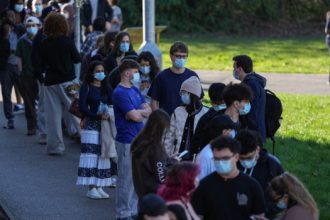
Omonisi, who doubles as Chief Executive Officer of the NCS, made this appeal during the World Cancer Day Regional Mega Rally and awareness walk for the South-South zone, which took place in Port Harcourt, Rivers State.
He noted that the concentration of cancer interventions in major cities and state capitals has left rural dwellers at a disadvantage, with many cases only detected at advanced stages.
Addressing participants at the rally, themed “United by Unique,” he underscored the human dimension of cancer, describing it as more than a medical condition reflected in statistics.
“As we gather in the great city of Port Harcourt, Rivers State, for the 2026 World Cancer Day Regional Mega Rally for the South-South Zone, we stand united under a powerful global theme: ‘United by Unique.’ It is a reminder that cancer is not just a disease of statistics, but a deeply human experience,” he said.
“Behind every diagnosis is a story — a mother holding on for her children, a young graduate facing uncertainty, a survivor rebuilding life after treatment, and a family navigating fear and hope simultaneously.
“To every Nigerian living with cancer, to survivors, caregivers and families remembering loved ones, we say: You are seen. You are not alone. Your lives matter.”
Omonisi explained that selecting Port Harcourt as host city was a strategic decision, pointing to the state’s investment in healthcare infrastructure, particularly in cancer management.
“Rivers State has demonstrated strong commitment toward improving health infrastructure, including cancer care. We acknowledge the strides made through facilities such as the Dr Peter Odili Cardiovascular and Cancer Centre, which represents hope for many families in this region,” he said.
“Bringing the 2026 Regional Mega Rally to Port Harcourt is intentional. It reinforces our message that cancer control must not be centralised in Abuja or Lagos alone. Every geopolitical zone deserves visibility, access and action.
“The South-South region faces unique environmental, economic and healthcare access challenges. True to this year’s theme, each region’s cancer burden is unique, yet our resolve to confront it is united.”
He raised alarm over the growing incidence of cancer nationwide, while stressing that early detection remains critical to reducing mortality.
“Cancer is no longer a distant threat. It is here. It is rising. Yet the tragedy is that many cancers are preventable. Many are treatable. Many lives can be saved through early detection,” he said.
Highlighting systemic obstacles, Omonisi identified late presentation, inadequate screening facilities, high out-of-pocket costs, limited insurance coverage and a shortage of oncology professionals as persistent barriers to effective cancer care.
“Only a small percentage of Nigerians are currently covered under health insurance. The majority still rely on catastrophic out-of-pocket payments. This is unsustainable and unjust,” he added.
While acknowledging recent advancements, including the establishment of the National Institute for Cancer Research and Treatment (NICRAT), the strengthening of the National Cancer Control Plan (2026–2030), the rollout of the Cancer Health Fund, Nigeria Cancer Access Partnership initiatives, expansion of cancer registries and upgrades of selected federal tertiary hospitals as centres of excellence, he maintained that more inclusive efforts are required.
“These gains are commendable, but progress must accelerate, reaching the forgotten rural communities and IDPs. Nigeria is currently grappling with insurgency and internal displacement, particularly in parts of Northern Nigeria.
“Millions of Nigerians live in IDP camps across several states. Unfortunately, most cancer interventions remain concentrated in urban centres and state capitals. Rural communities, where late-stage presentations are most common, are often neglected. IDPs are even more invisible in cancer programming. This is unacceptable,” he said.
In her remarks, the Permanent Secretary of the Rivers State Ministry of Health, Prof. Justina Jumbo, reiterated that early diagnosis remains a decisive factor in successful cancer treatment. She stated that prompt detection significantly enhances survival rates and treatment outcomes.
Jumbo further described the Dr Peter Odili Cardiovascular and Cancer Centre as a world-class facility equipped to manage cancer and cardiovascular diseases, reaffirming the state’s commitment to quality healthcare delivery.