





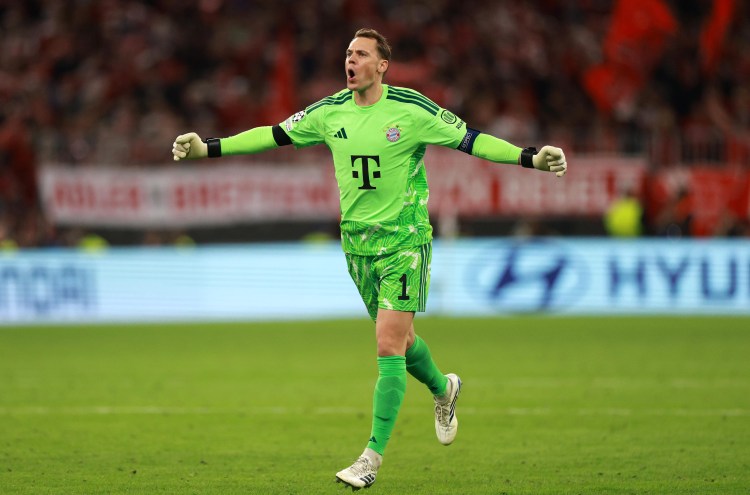
Manuel Neuer has added another remarkable milestone to an already extraordinary career after becoming the oldest German player to appear in the UEFA Champions League.
The Bayern Munich goalkeeper reached the landmark during the club’s Champions League meeting with Bodø/Glimt this week, moving beyond former Germany international goalkeeper Jens Lehmann as the oldest German to feature in the competition.
Neuer’s achievement is another reminder of his exceptional longevity at the highest level of European football. Now in his 40s, the veteran remains involved in Bayern’s biggest matches despite being well beyond the age at which most elite goalkeepers have ended their careers.
The record also adds another chapter to Neuer’s legacy. Widely regarded as one of the most influential goalkeepers of his generation, he revolutionized the position with his aggressive positioning, confidence with the ball at his feet and willingness to operate far outside his penalty area.
However, the milestone may also prompt a wider discussion around Bayern’s long-term plans between the posts.
While Neuer’s continued presence is an impressive testament to his durability and professionalism, Bayern are competing at the highest level in domestic and European football. That naturally raises questions about whether the club should already be prioritizing a younger long-term successor.
A comparison with several of Europe’s other elite clubs further highlights Neuer’s unusual situation. Teams such as Real Madrid, Arsenal and Paris Saint-Germain have generally relied on younger goalkeepers, making Bayern’s continued dependence on a goalkeeper in his 40s particularly notable.
That does not diminish what Neuer has accomplished. If anything, his ability to remain a Champions League player at this stage of his career makes the record even more extraordinary.
For Bayern, though, the achievement can be viewed in two ways: a celebration of one of the greatest goalkeepers in football history and a potential reminder that the club must eventually prepare for life after its legendary No. 1.