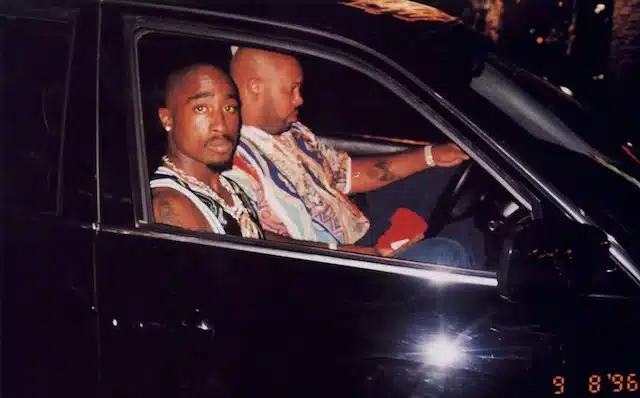
Leonard Jefferson, the man who captured what became the last known photograph of Tupac Shakur alive, has testified about his chance encounter with the rap legend. He also described the circumstances surrounding the Tupac final photo. The testimony also covered the terrifying gunfire that followed minutes later.
According to CNN, Jefferson took the stand in Las Vegas on Friday during the murder trial of Duane “Keffe D” Davis. He recounted how an ordinary encounter at a traffic light on September 7, 1996, placed him close to one of hip-hop’s most infamous killings. Ultimately, this led him to capture that final Tupac photo which has since become so iconic.
Jefferson recalls spotting Tupac in BMW
Jefferson told the court that he was driving along Las Vegas Boulevard when a BMW pulled alongside his vehicle. At that moment, the final Tupac photo began taking shape in history as its wheels initially caught his attention.
When he looked up, he recognised Tupac sitting in the passenger seat. Death Row Records co-founder Marion “Suge” Knight was behind the wheel. Knight would soon be featured in the photograph that would become Tupac’s final image.
Jefferson had previously been introduced to Tupac through people connected with Death Row Records. He decided to greet the rapper, whose photo was about to be taken.
“Hey, what up, Pac?” he recalled saying, as he would soon take that remarkable final Tupac photo.
Tupac initially appeared to take a second look before recognising him and responding.
Jefferson then asked where they were going. The rapper told him they were headed to a club and suggested he follow. This happened minutes before the final Tupac photograph was snapped.
Last-known Tupac photo captured at traffic light
Before the traffic light changed, Jefferson asked if he could take a photograph. Notably, this moment would later be remembered as the instant Tupac’s final photo was taken.
“I said, ‘Man, let me get a picture real quick,’” he testified, referring to what is widely regarded among fans as the Tupac final photo.
Jefferson had a 35mm camera inside the centre console of his vehicle. He quickly grabbed it and photographed Tupac and Knight sitting inside the BMW. In this way, he ensured the final Tupac photo would be preserved for posterity.
That photograph would become an iconic image following the rapper’s death. It shows Tupac dressed in a basketball jersey and sitting beside Knight shortly before the fatal shooting. This instantly recognisable picture is the Tupac final photo seen globally.
Once the light turned green, the BMW and vehicles travelling with it moved ahead, little knowing that the journey would shortly turn deadly. As a result, the moment immortalised the last known Tupac photo forever.
Jefferson recognised some of the cars in the entourage from Los Angeles. He allowed them to pass before following several vehicles behind Tupac and Knight. In doing so, he trailed the car from which that final Tupac photo had been taken only moments before.
Gunshots erupt minutes later
The journey changed suddenly when Jefferson heard a burst of gunfire. This happened just after he had taken that legendary final Tupac photograph.
“All of a sudden I just hear pop, pop, pop,” he told the court, recalling the chaos that erupted shortly after the Tupac final photo was captured.
Jefferson said the traffic ahead came to a stop as people began moving towards the BMW. The vehicle, only minutes earlier, had been the backdrop for Tupac’s final photo.
He then saw Knight outside the vehicle as a police officer arrived. The officer began shouting commands at him to get down, on a scene now etched in history by the Tupac final photo moment.
According to Jefferson, Knight urgently tried to explain what had happened. This was a story that unfolded directly after the infamous photo of Tupac was taken.
“My man Pac is shot, Pac is shot. We need help. Pac is shot,” Jefferson recalled hearing Knight say, words heard in the aftermath of the Tupac final photo.
The officer then approached the vehicle as the seriousness of the situation became clear. This all occurred just moments after the car was photographed for Tupac’s final photo.
Tupac died six days after attack
Tupac was struck multiple times during the drive-by shooting near Flamingo Road and Las Vegas Boulevard. This occurred just minutes after that last Tupac final photo had been captured at the traffic light.
The 25-year-old rapper was rushed to hospital but died from his injuries six days later on September 13, 1996. The image earlier taken would become Tupac’s final photo released to the world.
Knight survived the attack, remaining a figure in the story behind the renowned final Tupac photo.
Nearly three decades later, Jefferson’s testimony has brought jurors back to the final minutes before the shooting. It provides a first-hand account from someone who not only captured one of Tupac’s final moments but was also close enough to hear the shots that followed. He is the man behind the infamous Tupac final photo.
Testimony unfolds in Keffe D murder trial
Jefferson testified as prosecutors continue their case against Davis. Davis is the only person ever charged with murder in connection with Tupac’s death. This is the case that made Jefferson’s Tupac final photo so significant.
Davis has pleaded not guilty, but the story remains deeply tied to the events of the Tupac final photograph.
Prosecutors allege that Davis helped orchestrate the shooting as retaliation after Tupac and members of his entourage attacked Davis’ nephew, Orlando Anderson. This occurred at the MGM Grand earlier that evening. Notably, it happened the same night as the final Tupac photo was taken.
The prosecution has also played recordings of Davis speaking to police years after the killing. These include a 2008 interview in which he described being inside the Cadillac involved in the shooting. In addition, he detailed how a firearm reached the back seat, events directly following the night of Tupac’s final photo.
His defence maintains that Davis exaggerated or fabricated previous accounts of his involvement for attention and financial gain. Yet, the photo remains an indelible piece of evidence from that night.
For Jefferson, however, his testimony centred on what he personally witnessed — an unexpected meeting with Tupac. He quickly took a photograph and, minutes later, heard the sound of gunfire. That moment turned that image into a lasting piece of hip-hop history – the Tupac final photo seen around the world.