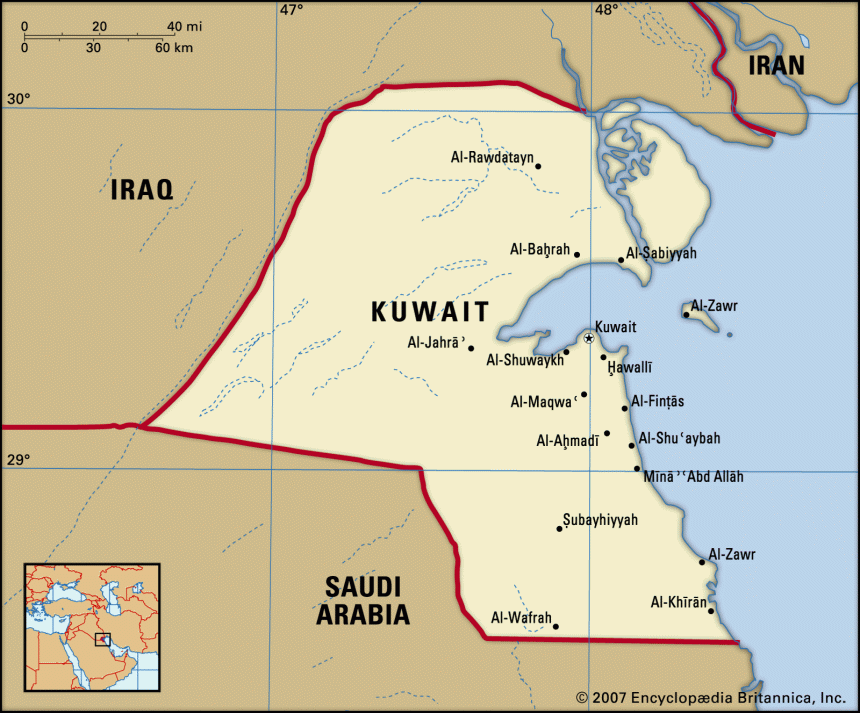
Fires broke out at Kuwait’s key Mina al-Ahmadi oil refinery after multiple drones attacked the facility in the early hours of Friday, the Kuwait Petroleum Corporation has confirmed.
No injuries have been reported. The refinery, one of the largest in the Middle East, can process up to 346,000 barrels of oil per day. It has been targeted by Iranian drones twice before during the five-week-long conflict.
The Kuwait Petroleum Corporation said emergency and firefighting teams have been working to contain the fires in some of the refinery’s 39 operating units and prevent them from spreading. Air quality in the affected area is being monitored, and so far no negative impact on the local environment has been recorded.
The attack comes as the United States and Israel step up strikes on Iranian infrastructure. On Thursday, a US strike on the B1 suspension bridge connecting the city of Karaj to Iran’s capital, Tehran, killed at least eight people and injured nearly 100, according to local officials. Iranian state media said many people were picnicking near the bridge for the end of the Persian New Year holidays when it was hit.
US President Donald Trump posted on his Truth Social platform, saying “much more to follow” and later suggested that Iranian bridges are “next, then electric power plants.”
Meanwhile, the Israel Defense Forces said missiles were launched from Iran towards Israel overnight, with defensive systems operating to intercept the threat. A train station in Tel Aviv was damaged by shrapnel, according to Israeli military radio.
French President Emmanuel Macron criticized Trump’s approach to the war, saying from South Korea, “This is not a show. We are talking about war and peace and the lives of men and women. When you want to be serious you don’t say every day the opposite of what you said the day before.”
The United Nations Security Council is scheduled to vote later Friday on a resolution that would authorize member states to use “all defensive measures” to secure the Strait of Hormuz.