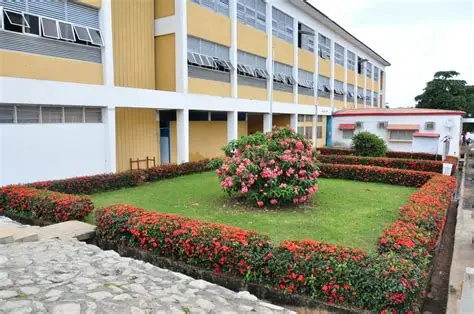
The Kaduna State Government has stepped up investment in basic education with the construction and rehabilitation of 3,267 classrooms and the provision of 81,540 units of furniture across the state’s 23 local government areas.
The intervention, implemented under the administration of Governor Uba Sani, also covers school sanitation, water supply, science education and digital learning facilities as part of a broader effort to improve both access to education and the quality of the learning environment.
Among the facilities provided are 2,252 toilets, 180 hand-pump boreholes, 87 science laboratories and 29 computer centres. The programme also includes smart boards, teaching and learning materials, monitoring vehicles, bilingual schools and vocational training centres.
The projects were formally inaugurated across the state, with Deputy Governor Hadiza Sabuwa Balarabe representing the governor at Sultan Bello Primary School in Unguwan Sarki, Kaduna.
Balarabe said the investments were rooted in the administration’s human capital development strategy, describing education as a foundation for the state’s long-term development, according to The Nation.
She said the quality of education available to children would have a direct bearing on the future workforce and leadership of Kaduna, adding that primary education deserved particular attention because it provides the foundation for subsequent learning.
Infrastructure linked to access
The infrastructure expansion comes as Kaduna continues efforts to reduce the number of children outside the formal school system.
The state’s latest mapping exercise identified 187,719 out-of-school children after surveying more than 360,000 households. Government officials said the figure represents a substantial decline from the more than 500,000 children previously recorded as being out of school.
Under the Reaching Out-of-School Children (ROOSC) Project, Kaduna is seeking to enrol 100,000 children over a four-year period.
The initiative combines conventional schooling with alternative pathways, including catch-up centres, accelerated basic education and integrated Qur’anic and Tsangaya education.
The approach recognises that expanding enrolment must go hand in hand with improving the capacity and conditions of schools receiving returning pupils.
Water, sanitation and learning facilities
The latest intervention goes beyond classroom construction.
The provision of water and sanitation facilities is expected to improve the general school environment, with access to toilets and clean water particularly relevant to attendance and retention among girls.
Government officials have also emphasised the need to equip classrooms with learning resources rather than concentrating solely on physical infrastructure.
Education Commissioner Prof. Abubakar Sani Bello said the administration’s policies were intended to produce visible improvements in the day-to-day experience of pupils.
He said the classrooms, water facilities, laboratories, toilets and furniture represented different components of the same objective — creating schools in which children can learn under safer and more functional conditions.
The state has also supplied hundreds of thousands of teaching and learning resources covering subjects such as literacy, numeracy and science.
Vocational training introduced in basic schools
Kaduna’s education programme also incorporates practical skills development.
Nine vocational centres have been established in public basic schools, where pupils are being introduced to trades and technical areas including welding and fabrication, electrical installation, carpentry, tailoring, solar installation, plumbing and masonry.
The government says the initiative is intended to broaden the purpose of basic education by giving learners exposure to practical skills alongside conventional academic instruction.
Four bilingual education schools have also been completed in Rigachikun, Zaria, Giwa and Kauru through support from the Universal Basic Education Commission and the Islamic Development Bank.
The schools comprise 192 classrooms with a combined capacity of approximately 7,680 learners.
Other interventions include 18 smart boards, motorcycles and vehicles intended to strengthen school supervision and quality assurance.
Closing the gap for children outside school
For Kaduna, the expansion of education infrastructure is closely connected to its campaign to bring more children into school.
The 187,719 children identified through the latest mapping exercise remain a significant challenge despite the reported reduction from earlier figures. Bringing 100,000 of them into education through ROOSC will require more than enrolment campaigns.
Development partners working on the programme have highlighted the importance of combining school infrastructure with household support, community mobilisation, teacher development and measures designed to improve learning outcomes.
The scale of Kaduna’s current investment therefore reflects a two-track challenge: expanding the physical capacity of the basic education system while ensuring that children who enter or return to school have the resources and learning conditions needed to remain there and benefit from their education.