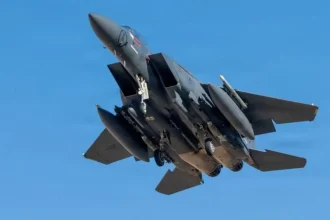


The Federal Government has indicated that more military strikes could follow the Christmas Day bombardment carried out jointly by Nigerian and United States forces against jihadist groups in the country.
Nigeria’s Minister of Foreign Affairs, Yusuf Tuggar, confirmed this on Friday while speaking on Channels Television, stressing that the operation was not a one-off action.
“It is an ongoing thing, and we are working with the US. We are working with other countries as well,” Tuggar said when asked if further strikes were expected.
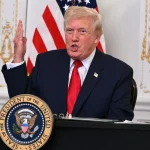
The comments followed airstrikes carried out on Christmas Day in parts of northwestern Nigeria, which US President Donald Trump described as “powerful and deadly” attacks against Islamic State-linked militants.
Nigeria has been battling multiple security challenges, including a long-running jihadist insurgency in the northeast and widespread banditry, kidnappings and armed violence in the northwest.
In a statement, the Nigerian military said its forces, working with the United States, “conducted precision strike operations against identified foreign ISIS-linked elements” in the northwest.
Tuggar said Nigeria provided the intelligence that led to the strikes and revealed that he spoke with US Secretary of State Marco Rubio ahead of the operation.
“It’s Nigeria that provided the intelligence,” the minister said.
The strikes came amid diplomatic tensions between Abuja and Washington after Trump framed violence in Nigeria as mass killings of Christians, a position the Nigerian government has strongly rejected.
US Africa Command later said “multiple ISIS terrorists” were killed in an attack in Sokoto State. US defence officials also released footage showing what appeared to be a missile launch at night from a US naval vessel.
Residents in remote communities in Sokoto State said they were shocked by the explosions.
“We heard a loud explosion which shook the whole town, and everyone was scared,” said Haruna Kallah, a resident of Jabo in Tambuwal Local Government Area.
“We initially thought it was an attack by Lakurawa,” he added, referring to an armed group linked by some analysts to jihadist movements in the Sahel. “Later we learnt it was a US drone attack, which surprised us because this area has never been a Lakurawa enclave.”
It remains unclear which specific armed groups were targeted. While jihadist groups are mainly active in northeastern Nigeria, some have expanded into the northwest.
Researchers have linked elements of the Lakurawa group in Sokoto to the Islamic State Sahel Province, which operates mainly in Niger and Mali, though other analysts dispute these links. Some fighters described as Lakurawa are also believed to have connections with JNIM, an al-Qaeda-linked group active in the region.
Despite welcoming the strikes, some analysts say Nigeria faced strong pressure to cooperate.
“I think Trump would not have accepted a ‘No’ from Nigeria,” said Malik Samuel, an Abuja-based researcher with Good Governance Africa.
Samuel noted that both the attackers and victims in the northwest are largely Muslim, countering claims that the violence is driven by religious persecution.
Tuggar said President Bola Tinubu approved the strikes and stressed that religion played no role in the decision.
“It must be made clear that it is a joint operation, and it is not targeting any religion nor simply in the name of one religion or the other,” the minister said.