Iran has threatened to block all oil shipments through the Strait of Hormuz and warned global markets to prepare for crude prices reaching $200 per barrel, as the Middle East conflict intensifies with no end in sight.
Ebrahim Zolfaqari, spokesperson for Tehran’s Khatam al-Anbiya military command headquarters, issued the warning on Wednesday, declaring that Iran would not allow “a single litre of oil” to pass through the strategic waterway for the benefit of the United States, Israel and their allies .
“Get ready for oil to be $200 a barrel, because the oil price depends on regional security which you have destabilised,” Zolfaqari said in comments addressed to the United States . He further warned that “any vessel or oil shipment intended for America, the Zionist regime or their hostile allies will be a legitimate target for us” .
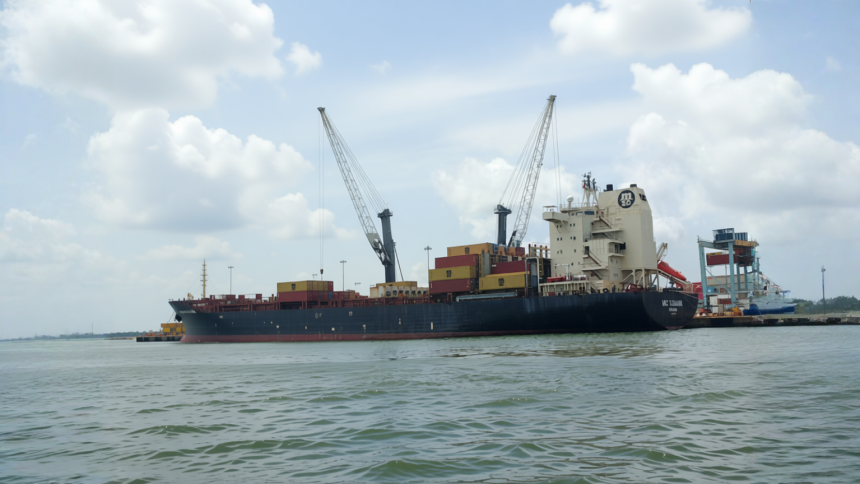
The threat comes as three more merchant ships were struck in the Gulf by unknown projectiles, according to maritime security agencies. A Thai-flagged bulk carrier was set ablaze, forcing its crew to abandon ship with three sailors missing, while Japanese and Marshall Islands-flagged vessels also sustained damage . At least 14 commercial vessels have been hit in or near the Strait of Hormuz since the conflict began .
In response to the escalating crisis, the International Energy Agency (IEA) announced that its 32 member countries have unanimously agreed to release 400 million barrels of oil from emergency reserves—the largest such release in the agency’s history .
IEA Executive Director Fatih Birol described the oil market challenges as “unprecedented in scale,” noting that the coordinated action aims to “alleviate the immediate impacts of the disruption in markets” . The release exceeds the 182 million barrels that IEA members made available in 2022 following Russia’s invasion of Ukraine .
However, energy analysts expressed doubt that the measure would be sufficient to offset the scale of disruption. The Strait of Hormuz normally carries about 20 per cent of the world’s oil, and the released reserves would replace only about three weeks’ worth of the blockaded supply .
“The most important thing for a return to stable flows of oil and gas is the resumption of transit through the Strait of Hormuz,” Birol acknowledged .
Meanwhile, the African Democratic Congress has called on the Nigerian government to introduce a temporary cap on petrol prices to protect citizens from the economic fallout of the Middle East crisis .
In a statement issued in Abuja by the party’s National Publicity Secretary, Bolaji Abdullahi, the ADC warned that rising fuel prices are worsening the cost-of-living crisis for millions of Nigerians
“Recent hikes in petrol prices reflect rising volatility in global oil markets, driven in part by the ongoing crisis in the Middle East. However, external shocks cannot justify allowing fuel prices to spiral without restraint in an already fragile economy,” the party said .
The ADC also criticised the Federal Government’s plan to distribute 100,000 Compressed Natural Gas conversion kits, describing the initiative as inadequate given that Nigeria has over 11 million vehicles on its roads .
“For everyday Nigerians, petrol determines the price of food, transportation and survival. When petrol rises, everything else rises with it,” the party stated, urging the government to introduce targeted palliatives for low-income households .
Despite US President Donald Trump’s assertion that the war would end “very soon,” Israeli Defence Minister Israel Katz said on Wednesday that the operation “will continue without any time limit, as long as required, until we achieve all objectives” .
Iranian officials have maintained they will not negotiate, with the Revolutionary Guard warning that any vessel attempting to pass through the strait must obtain permission from Tehran . Reports also indicate that Iran has begun laying mines in the waterway, further complicating any military effort to reopen the strategic passage .