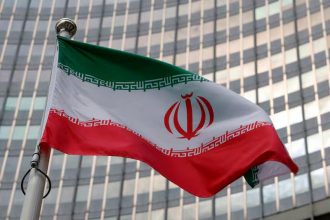
The fallout from US and Israeli missile strikes on Iran has intensified already strained relations between Washington and European capitals, with prominent figures in the Maga movement accusing Europe of failing to act decisively at a pivotal geopolitical moment.
In the immediate aftermath of the attacks, European Commission President Ursula von der Leyen announced on X that she would convene a special “security college” on Monday.
For many within the Maga movement, the timing reinforced long-held suspicions that Europe is not a serious actor in global affairs. Jokes about European leaders avoiding weekend work quickly gave way to a broader critique: that the continent lacks urgency and resolve when crises erupt.
The war has accelerated the erosion of the trans-Atlantic alliance. Washington’s frustration with Europe’s uneven response has spread beyond its most predictable critics.
Senator Lindsey Graham wrote that “everyone in Europe is rightly impassioned about Russia invading Ukraine. But when it comes to the long-suffering people of Iran, Europe has been pathetic.”
Former Trump press secretary Sean Spicer added: “just a reminder, our good buddies the British refused to allow the US military to operate out of any of their bases”. Meanwhile, Washington Post columnist Marc Thiessen declared that the “special relationship is dead”.
Responding to what he viewed as equivocal remarks from UK Defence Secretary John Healey, Senator Mike Lee argued that America’s “membership in Nato is not sustainable”.
For Maga supporters, the perceived absence of steadfast backing from Washington’s closest allies during a crisis merely confirms long-standing doubts about Europe’s reliability. Several factors underpin the widening divide.
Ukraine is chief among them. Many within the administration reportedly see the war as a regional, intra-Slavic conflict with limited bearing on core US national interests. By contrast, European governments have treated repelling Russia’s invasion as an existential priority.
Tensions were compounded when President Donald Trump pressed Nato allies to purchase American military equipment for Kyiv, deepening financial and political strains across the alliance.
Mutual resentment has also grown from what European leaders regard as dismissive treatment from Washington. Anger lingered in European capitals after Trump suggested Nato troops had held back from frontline fighting in Afghanistan. His past remarks about acquiring Greenland further unsettled relations.
A third and more fundamental disagreement concerns international law. The European Union has long viewed its regulatory power — rooted in legal frameworks governing its vast single market — as a source of geopolitical influence. The bloc is built upon multilateral legal principles, a foundation many in Europe believe underpins global stability. By contrast, the Trump administration has often treated international law with scepticism, seeing it as either ineffectual or an intrusion on US sovereignty.
This clash appears to have influenced Britain’s initial decision to restrict US use of its military bases, a move that strained one of the core pillars of the so-called Special Relationship: defence cooperation.
Prime Minister Keir Starmer later clarified on Sunday night (1 March) that US forces could use British bases for defensive bombing operations, stressing that such action was legally justified under collective self-defence. For many in the Maga movement, however, Europe’s legal caution reflects what they regard as an overcommitment to globalist doctrine.
Not all European leaders share the same stance. Polish officials indicated they had been briefed in advance of the strikes.
German Chancellor Friedrich Merz has suggested that Europe may need to rethink its strict adherence to international legal norms, stating in a Sunday speech that such frameworks have proven ineffective against the Iranian regime.
Still, the decision by Washington to launch an offensive in the Middle East with minimal coordination has widened an existing diplomatic crack into a visible fissure. For many European leaders, reliance on the American security umbrella appears increasingly fraught. As the conflict with Iran unfolds, both sides of the Atlantic are confronting a stark reality: their political worldviews may no longer be compatible.