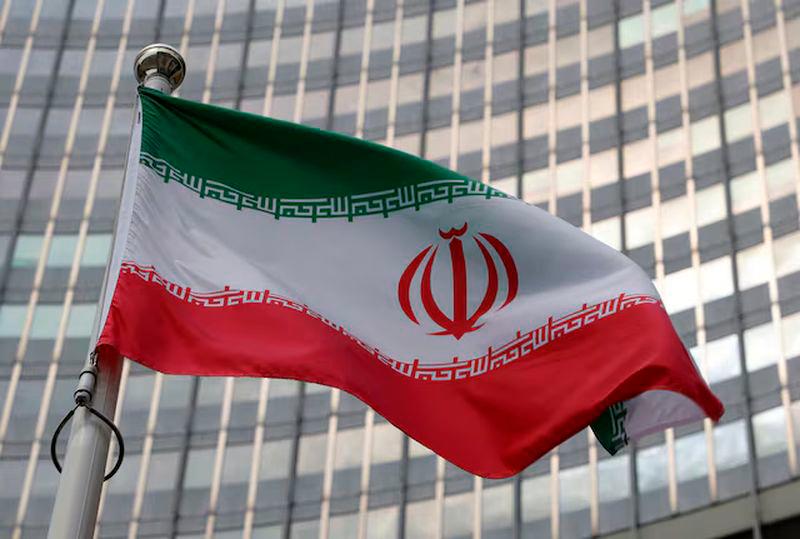
Iranian authorities carried out at least 1,639 executions in 2025, according to a joint annual report released Monday by Norway-based Iran Human Rights (IHR) and Paris-based Together Against the Death Penalty.
The groups described the figure as an average of more than four executions per day, warning that the trend could worsen amid ongoing political unrest and regional conflict involving the United States and Israel.
The report said the 2025 total marks the highest number of executions recorded since 1989, and represents a steep 68 percent rise compared with 975 executions documented in 2024. Among those executed were at least 48 women, a figure the organizations say is the highest in over two decades.
Researchers from IHR and ECPM cautioned that the situation could further deteriorate.
They warned that if the Islamic Republic “survives the current crisis, there is a serious risk that executions will be used even more extensively as a tool of oppression and repression”.
According to IHR, which verifies executions through at least two independent sources due to limited official reporting in Iran, the documented total should be considered a minimum estimate.
The group added that 2025 saw the highest annual execution count since it began tracking figures in 2008, and the largest overall since the post-revolution period of 1989.
The organizations also raised concerns about ongoing legal proceedings linked to protests that erupted in January 2026.
They said hundreds of detainees remain at risk of capital punishment after being charged with offences carrying the death penalty, following a crackdown that rights groups say resulted in thousands of deaths and mass arrests.
Commenting on the scale of executions, IHR director Mahmood Amiry-Moghaddam said, “By creating fear through an average of four to five executions per day in 2025, authorities tried to prevent new protests and prolong their crumbling rule,”.
The report further stated that even during the conflict involving Israel and the United States, which began on February 28, Iranian authorities executed seven individuals connected to the January protests. This included six people accused of belonging to the banned opposition group People’s Mujahedin of Iran (MEK), as well as a dual Iranian-Swedish citizen accused of spying for Israel.
ECPM executive director Raphael Chenuil-Hazan said, “The death penalty in Iran is used as a political tool of oppression and repression, with ethnic minorities and other marginalised groups disproportionately represented among those executed.”
The findings also highlighted that ethnic minorities, particularly Kurdish communities in the west and Baluch populations in the southeast, remain heavily affected. These groups are predominantly Sunni Muslim in a country where the majority follow Shia Islam.
Nearly half of all executions were linked to drug-related convictions, the report noted. It also documented a significant rise in executions of women, stating that 48 women were hanged in 2025, a 55 percent increase from 31 in 2024. Of these, 21 were reportedly convicted for killing husbands or fiancés, with rights groups often pointing to cases involving domestic abuse.
While most executions were conducted inside prisons, the report observed a notable increase in public hangings, which more than tripled to 11 cases in 2025. Although Iranian law permits other execution methods, hanging has remained the only method used in recent years.
Human rights organizations, including Amnesty International, continue to state that Iran carries out more executions per capita than any other country, and ranks second globally after China in total executions, though reliable figures for China are not publicly available.