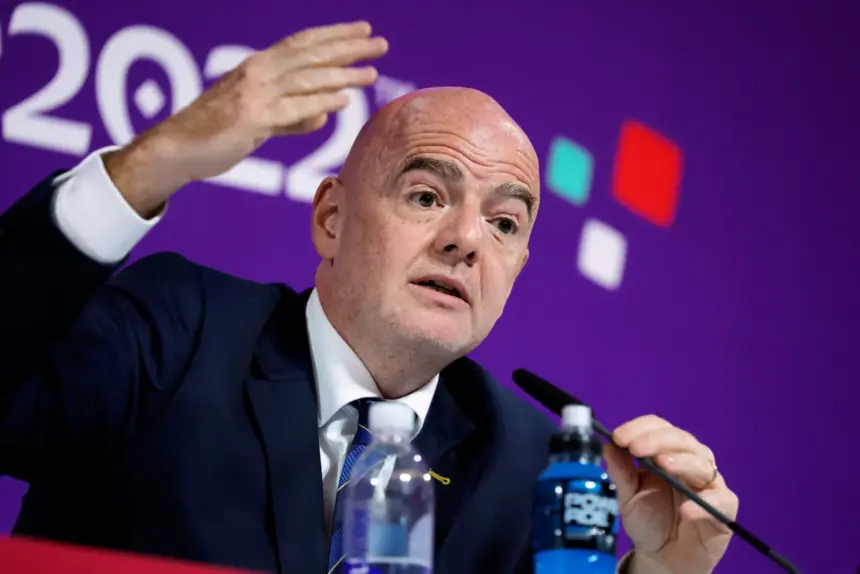
The Infantino leadership crisis has deepened after CONCACAF called for a comprehensive review of the FIFA president’s conduct following his abandoned World Cup investment proposal. This Infantino leadership crisis could have significant long-term effects on world football governance.
According to AFP, the football body for North America, Central America and the Caribbean issued the demand on Saturday. It accused Gianni Infantino of repeatedly bypassing established governance procedures while making major decisions during the Infantino leadership crisis.
CONCACAF welcomed FIFA’s decision to withdraw the controversial proposal but said cancelling it was not enough to resolve the wider leadership concerns it exposed. The Infantino leadership crisis has sparked debate on transparency at the top of FIFA.
The confederation described the investment proposal as another example of poor governance and unilateral decision-making under Infantino.
“This recent unilateral and egregious act of poor governance and leadership follows a pattern of missteps and similar behaviour,” it said.
CONCACAF added that a wider examination of Infantino’s presidency had become necessary following the controversy.
The statement placed further pressure on the FIFA president, who already faces strong opposition from European and Asian football authorities.
CONCACAF questions Infantino’s leadership
FIFA announced plans last week to create a commercial subsidiary responsible for managing its biggest competitions.
The proposed company would have overseen events including the men’s and women’s World Cups and the Club World Cup.
Private investors would have been allowed to acquire minority, non-controlling interests in the new enterprise.
Infantino argued that the plan could raise up to $4.2 billion and accelerate football development across FIFA’s 211 member associations.
However, CONCACAF said FIFA advanced the proposal without proper transparency, consultation or due process.
It argued that a plan capable of changing the commercial structure of FIFA’s most valuable competitions should have passed through established governance channels.
The confederation said the proposal did not reach such an advanced stage accidentally. Instead, it described the development as evidence of leadership that had stopped placing football’s interests first.
CONCACAF also said its concerns were shared by other confederations, national associations and people involved in the game.
Infantino scraps divisive proposal
Infantino withdrew the investment plan on Friday after it triggered widespread opposition across world football.
He admitted that the project had created divisions which no longer supported its original objective.
The FIFA president had initially defended the plan as a new way to raise development funding for national football associations.
He said the proposed investment could provide each FIFA member with a one-off payment of $20 million in early 2027.
The plan would also have increased development funding for the 2027–2030 cycle from $8 million to $20 million per association.
FIFA maintained that the investors would not control football regulations, competition structures or major sporting decisions.
However, opponents feared that selling interests connected to FIFA tournaments could give private investors long-term influence over football’s most valuable assets.
CONCACAF members reject private investment
CONCACAF represents 41 associations across North America, Central America and the Caribbean.
Its region includes the United States, Canada and Mexico, which jointly hosted the recently concluded 2026 World Cup.
The confederation had earlier rejected Infantino’s proposal, questioning why FIFA needed outside investment when it already held substantial financial reserves.
CONCACAF said FIFA could use its existing resources to increase football development funding without surrendering a permanent commercial interest to private investors.
It promised to push for a greater share of FIFA’s reserves to support football development across its region.
The confederation said such funding should reach national associations without compromising the future ownership or control of FIFA competitions.
Its latest statement suggests that opposition has now moved beyond the abandoned proposal to Infantino’s wider approach to leadership.
UEFA also questions FIFA president
CONCACAF’s position follows strong criticism from UEFA, which represents Europe’s 55 football associations.
UEFA had warned that its members could boycott FIFA competitions if the investment plan proceeded. Notably, UEFA officials have referenced the Infantino leadership crisis in their calls for reform.
European officials argued that FIFA had failed to consult the confederations before presenting a proposal with far-reaching consequences.
They also rejected the idea of turning the World Cup into an investment asset partly owned by private companies.
The Asian Football Confederation later supported the concerns raised by UEFA and CONCACAF.
With the three confederations opposing the proposal, Infantino was unlikely to secure the majority required for approval.
The united resistance forced FIFA to abandon the scheme before it could reach a formal vote.
Pressure grows for FIFA governance reforms
The controversy has renewed calls for greater transparency and collective decision-making within FIFA.
Critics want major commercial and governance proposals to pass through FIFA’s established councils and oversight structures before reaching member associations.
They also want clarity on who develops such plans, how financial partners are selected and what protections exist against conflicts of interest.
CONCACAF said football’s future should not be determined through decisions taken without adequate consultation.
The confederation maintained that FIFA must rebuild trust by respecting its governance systems and involving stakeholders before making major changes.
It also suggested that Infantino’s handling of the proposal formed part of a wider pattern rather than an isolated mistake.
The demand for a comprehensive reckoning indicates that withdrawing the investment plan may not end the pressure on the FIFA president.
Although the immediate threat to FIFA’s competitions has eased, questions about Infantino’s judgment and leadership remain.
CONCACAF said its members would continue pushing for reforms that protect football’s resources and ensure that FIFA places the game ahead of private commercial interests.