


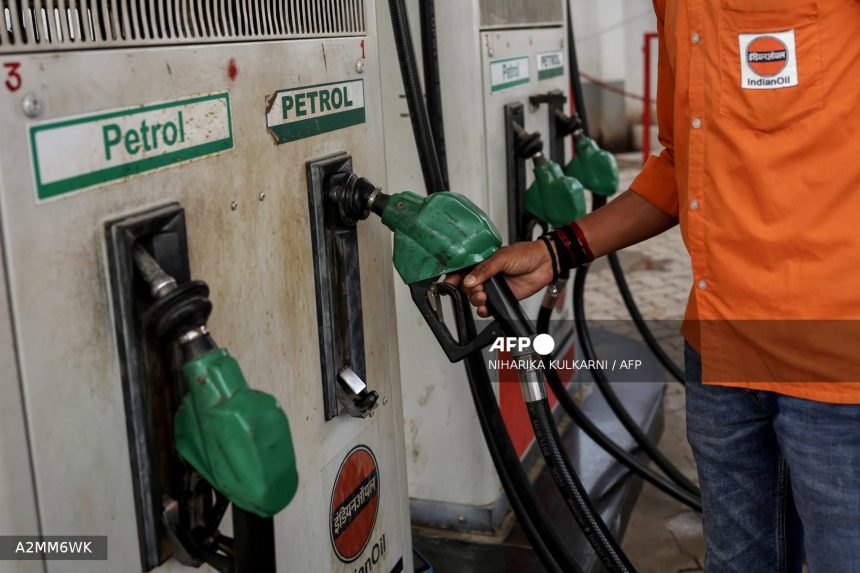
India has reduced taxes on diesel and petrol, the government announced on Friday, as the ongoing Middle East conflict continues to disrupt global energy supplies.
Finance Minister Nirmala Sitharaman said in a statement that the central excise duty on petrol and diesel for domestic consumption has been reduced “in view of the West Asia crisis.”
The South Asian nation, one of the world’s largest crude oil importers, relies on foreign suppliers for more than 85 per cent of its oil needs, with Russia being the biggest supplier.
Sitharaman said taxes on petrol and diesel have been slashed by 10 rupees ($0.11) per litre to “provide protection to consumers from rise in prices.”
She also announced charges on exports of diesel and aviation turbine fuel at 21.5 rupees ($0.23) and 29.5 rupees ($0.31) per litre.
“This will ensure adequate availability of these products for domestic consumption,” she added.
A surge in oil prices since the start of the conflict has sent fuel costs spiralling and sparked fears of shortages around the world after Iran partially closed the crucial Strait of Hormuz energy trade route.
Oil Minister Hardeep Singh Puri said Friday that India was “closely monitoring developments across energy supply chains, and essential commodities.” However, he insisted India has adequate supplies.
The oil ministry says it has “nearly two months of steady supply available for every Indian citizen regardless of what happens globally.”
Despite repeated assurances, panicking citizens have triggered long queues at filling stations. Several households have also rushed to buy electric stove tops, triggering shortages across stores and online platforms.
The oil ministry has asked citizens “not to be misled by a deliberately mischievous, coordinated campaign of misinformation that is being carried out to spread unjustified panic.”


