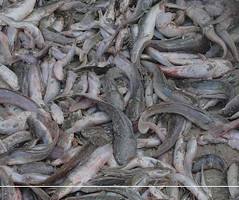
Authorities in India have uncovered illegal Mangur fish farms near the catchment area of Ujani Dam and in Kalthan No. 1 village in Indapur taluka, Pune district.
The fish stocks were destroyed during an operation on Monday, and cases were registered against those allegedly involved in the unauthorised cultivation.
The action was conducted by a joint team formed on the directions of the Pune District Collector. Mangur, also known as African catfish (Clarias gariepinus), is an exotic fish species whose cultivation has been prohibited in India.
The accused have been booked under Section 223 of the Bharatiya Nyaya Sanhita, which concerns the deliberate disobedience of a lawful order issued by a public servant. Charges were also filed under Section 59 of the Food Safety and Standards Act, 2006, relating to punishment for unsafe food, along with Sections 3, 5 and 15 of the Environment (Protection) Act, 1986, which provide powers to protect the environment and prescribe penalties for violations.
The Union Ministry of Agriculture imposed a ban on Mangur cultivation in December 1997. Fisheries officials have warned that the species could pose a threat to indigenous fish populations and disturb aquatic ecosystems.
Officials said the introduction of Mangur into rivers and reservoirs could result in the fish preying on native species while also competing with them for food and habitat. Indigenous varieties including Catla, Rohu and Mrigal could consequently face adverse impacts.
However, unauthorised Mangur farming has persisted in several parts of Maharashtra despite the prohibition, with Pune district also reporting such activity.
Archana Shinde, Assistant Commissioner of Fisheries, Pune, said people who come across illegal Mangur fish farms can share information with the fisheries department at acfpune@gmail.com.