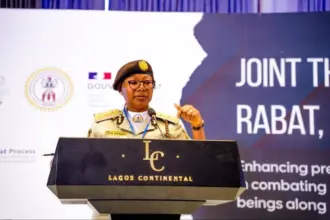





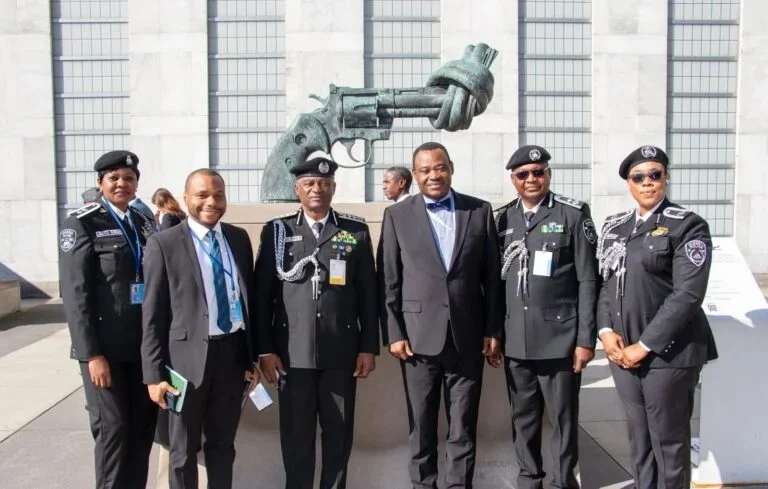
The Inspector-General of Police, Tunji Disu, has urged global law enforcement leaders to ensure that technology strengthens public trust in policing. He also urged that technology support transparency and respect for human rights.
According to NAN, Disu made the call at the Fifth United Nations Chiefs of Police Summit on Innovation and New Technologies in UN Policing on Wednesday.
The IGP was represented by the Chairman of the Police Service Commission, DIG Hashimu Argungu (retd.). He said police institutions must not allow technological advancement to weaken the confidence citizens have in law enforcement.
“Technology can enhance policing, but it can never replace public trust. The legitimacy of every police institution rests on the confidence of the people it serves,” he said.
Disu said technology would continue to transform policing across the world. However, public trust in policing would remain the foundation of every credible law enforcement institution.
“Together, through responsible innovation and visionary leadership, we can build policing institutions that are not only smarter but more trusted, more inclusive and better equipped to secure a peaceful world,” he said.
The police chief said the Nigeria Police Force serves more than 230 million people. He said it had entered a period of rapid digital transformation. Moreover, he explained that this situation makes innovation an operational necessity.
He said criminal networks now use artificial intelligence, encrypted communication and cyber-enabled fraud to carry out sophisticated crimes across borders.
“Criminal networks now exploit artificial intelligence, encrypted communication and cyber-enabled fraud to operate across borders with high sophistication,” he said.
Disu said this trend challenges traditional policing methods and forces security agencies to rethink how they protect vulnerable communities.
He, however, noted that the same technologies used by criminal groups also offer major opportunities for law enforcement agencies.
“Artificial intelligence, digital forensics and geospatial intelligence are transforming how we anticipate threats and conduct investigations,” he said.
The IGP said innovation must support transparency, accountability and human rights, rather than weaken democratic policing principles.
“Innovation must therefore strengthen transparency, accountability and respect for human rights. Technology should complement human judgment, not replace it,” he said.
He added that technology must remain rooted in the rule of law and the protection of human dignity.
Disu also called for wider international cooperation, to ensure that all nations benefit from new policing technologies. This should apply regardless of their level of development.
He said the future of UN policing must rest on genuine cooperation and capacity building. In addition, it needs fair access to digital tools for all member states.
The IGP reaffirmed Nigeria’s commitment to supporting international policing partnerships. These partnerships promote peace, security and the rule of law through responsible innovation.
The summit brought together 145 delegations, including ministers, inspectors-general of police, police chiefs and senior representatives of regional and professional policing organisations. All of these delegates met at the UN Headquarters.
The meeting focused on the future of UN policing, emerging technologies and international cooperation against transnational security threats.