The All Progressives Congress governorship candidate in Rivers State, Kingsley Chinda, has acknowledged that lawmakers who resisted the removal of fuel subsidy during the administration of former President Goodluck Jonathan failed to appreciate the policy’s wider economic implications.
Chinda, a member of the House of Representatives, said legislators who opposed the proposal at the time believed they were defending the interests of ordinary Nigerians. However, with the benefit of hindsight, he admitted that their decision was influenced by an inadequate understanding of the financial consequences of retaining the subsidy.
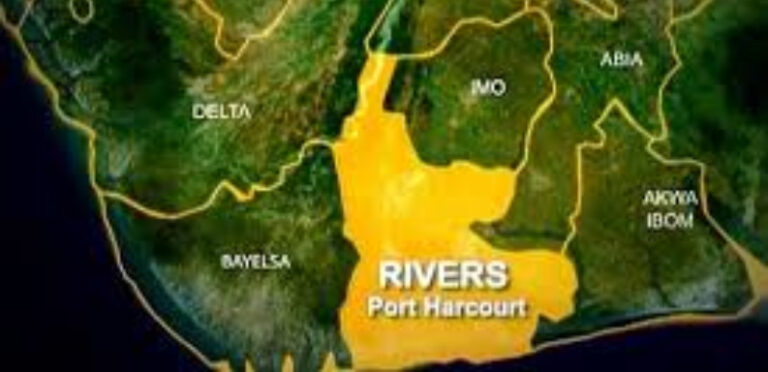
The lawmaker made the disclosure in Port Harcourt while addressing participants at the inauguration of the PBAT Door-to-Door Movement. His remarks were monitored during a live television broadcast.
Reflecting on the controversy, Chinda recalled that members of the House of Representatives, then led by former Speaker Aminu Tambuwal, had gone as far as holding a parliamentary session on a Sunday to resist Jonathan’s proposed subsidy removal.
He explained that although the lawmakers belonged to the same Peoples Democratic Party as the former president, they considered their opposition necessary to protect Nigerians from the anticipated economic consequences of higher petrol prices.
Chinda, however, now regards the lawmakers’ stance as misguided, arguing that they did not fully understand the financial implications of the subsidy regime.
“We were in a period of ignorance when we stood against fuel subsidy removal. We convened the parliament and sat on a Sunday with Aminu Tambuwal as the Speaker of the House of Representatives. We were all members of the PDP, and the President was PDP.
“But because we felt we were speaking for the people, that was why I said it was a period of ignorance. We stood against it. We didn’t know that there were those who were manipulated, those who were doing it for free, and Nigerians who believed that we were enjoying it for free,” he said.
Jonathan’s 2012 Subsidy Controversy
Chinda’s admission has brought renewed attention to the fierce political and economic debate that followed Jonathan’s attempt to withdraw the petrol subsidy in January 2012.
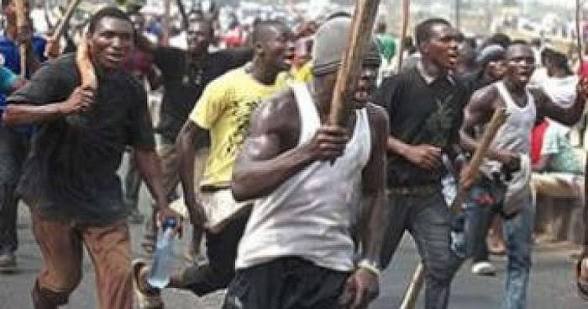
The proposal sparked nationwide demonstrations, with organised labour, civil society groups, opposition parties and other stakeholders mobilising Nigerians against the planned policy.
Under the banner of Occupy Nigeria, protesters staged demonstrations in different parts of the country, arguing that subsidy removal would worsen the financial difficulties of citizens already battling rising living costs.
The protests disrupted commercial activities and placed considerable pressure on the Jonathan administration, which eventually backed down from implementing the full proposed increase in petrol prices.
At the time, opposition politicians, including members of the APC, were among the strongest critics of the government’s decision. Lawmakers also raised concerns about the likely consequences of increased fuel costs on transportation, food prices and household spending.
However, Chinda now maintains that the continuation of the subsidy arrangement imposed an unsustainable financial burden on Nigeria, diverting substantial public resources that could have been channelled into development.
He argued that the policy was detrimental to the country’s economic progress and future prosperity.
“Fuel subsidy is not just a scam. It is against the interests of this country. It is against the development of this country. It is against you and your future,” Chinda said.
Subsidy Burden and Government Borrowing
The Rivers APC candidate also revisited the financial challenges confronting governments before the removal of the subsidy, particularly difficulties associated with meeting workers’ salary obligations.
According to him, the Federal Government frequently approached the National Assembly for approval to obtain loans to pay public sector employees, a situation that created disagreements among lawmakers.
He explained that legislators were sometimes unwilling to endorse additional borrowing because of concerns surrounding the utilisation of funds previously approved for capital projects.
Chinda alleged that money earmarked for infrastructure and other development initiatives had, in some instances, been diverted from its intended purposes, making it difficult for lawmakers to justify further borrowing to finance recurrent expenditure.
Recalling the frustrations experienced by members of the National Assembly, he said lawmakers struggled to understand why governments continued seeking loans to pay salaries despite earlier approvals for development-related borrowing.
“We were approving loans for capital projects, but most of the money was stolen and shared. And we had worked for this country, yet you could not approve a loan to pay us our salaries,” he said.
He added that lawmakers were eventually compelled to reconsider their resistance to further borrowing because of the need to prevent workers from going without their monthly earnings.
Chinda Defends Subsidy Removal
Defending the decision to discontinue the fuel subsidy, Chinda argued that the policy had increased the revenue available to the federal, state and local governments.
He said the additional allocations received by the different levels of government had helped address some of the financial difficulties that previously affected their ability to meet salary obligations.
According to the lawmaker, the situation has improved considerably, with governments now having greater access to funds for meeting their financial responsibilities.
“Today, all that is history. Salary is no longer a problem, both at the local government, state and federal levels. Why? Because you have more money to the states and more money to the local governments,” he said.
Despite defending the economic policy, Chinda acknowledged that its implementation had placed considerable pressure on Nigerians, particularly households and businesses struggling with increased expenses.
He nevertheless urged citizens to exercise patience, insisting that the difficulties associated with the reforms should not obscure the possibility of long-term economic recovery.
Drawing comparisons with Ghana and other countries that have experienced challenging economic adjustments, he expressed confidence that Nigeria could gradually overcome its current difficulties.
“Things are not easy, but for every difficulty you face, just be rest assured that this country is gradually and slowly coming out of the abyss,” he added.
Chinda further maintained that implementing major economic reforms often requires political determination, especially when the decisions involved are likely to attract public criticism and initially impose hardships on citizens.
He argued that governments must sometimes make difficult choices in pursuit of broader economic objectives, even when the immediate consequences are unpopular.