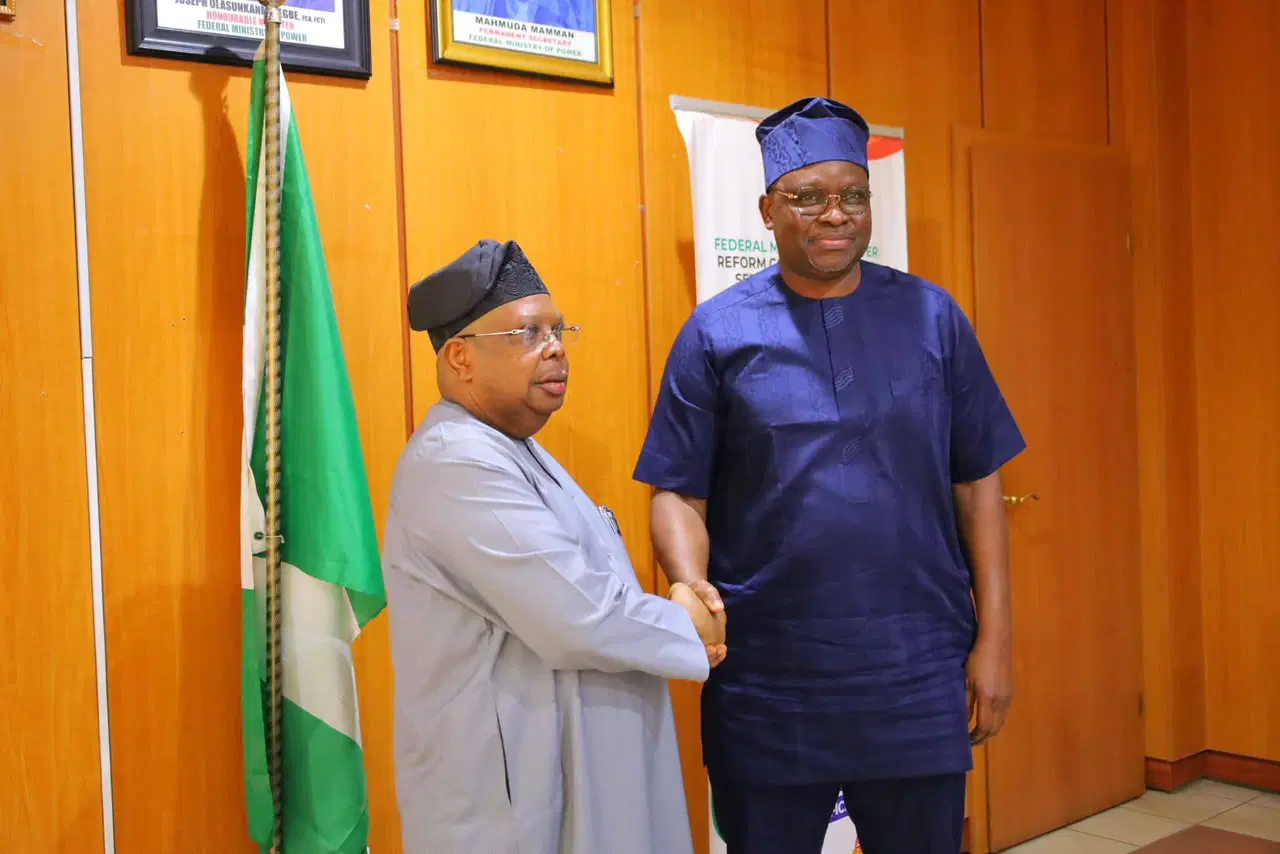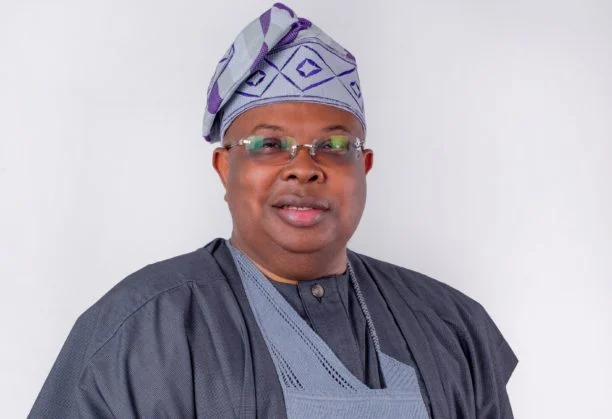
The Minister of Power, Joseph Tegbe, has offered an apology to Nigerians over the country’s persistent electricity crisis, saying President Bola Tinubu shares in the pain of citizens who sit in the heat without light, while acknowledging that the problems are inherited from decades of neglect.
“As the Minister of Power today, I understand the pains of Nigerians. If you sit at home with no light in the hot sun and everywhere is hot, you have the right to complain. President Tinubu shares in your pain and we are doing the best we can. A lot of the problems we have today are not problems of today, they are problems inherited over the years,” Tegbe said during an interview on TVC’s The Morning Brief on November 9, 2026 .
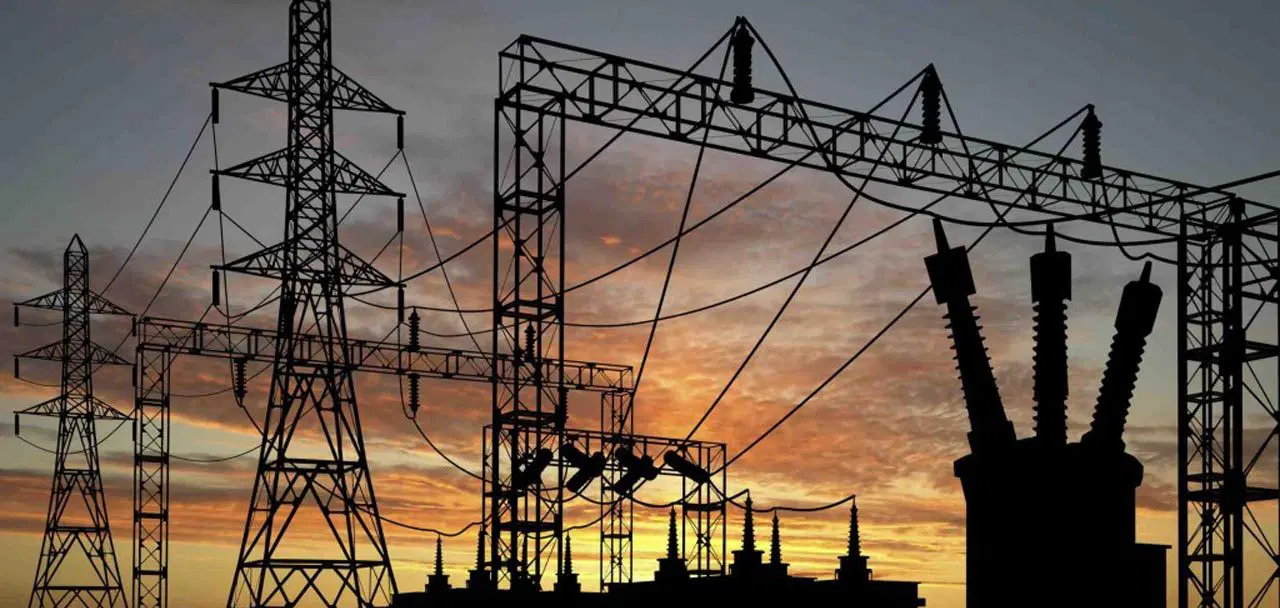
The minister’s apology came amid widespread outages that affected Lagos, Ogun and parts of Kwara State, which he attributed to planned maintenance at the Egbin Power Plant and the vandalism of a 330-kilovolt transmission line serving the Lagos electricity complex .
Tegbe disclosed that Nigeria has an installed generation capacity of about 13,625 megawatts but is only able to generate approximately 5,000 megawatts due to operational difficulties, infrastructure limitations and gas supply-chain constraints . He cited the Niger Delta Power Holding Company as an example, noting that facilities with the potential to generate more than 3,000 megawatts were producing only about 400 megawatts .
He explained that the electricity sector faces challenges across the entire value chain, including gas supply, generation and transmission. While Nigeria has sufficient gas resources, generation companies have been unable to pay for gas because of debts owed to them. The federal government, he said, had reduced the outstanding debt to N3.3 trillion, with N1.23 trillion paid down in recent months and the remaining N2 trillion scheduled for payment next year
When asked when Nigerians could expect stable power, Tegbe indicated that reliable electricity could take three to five years, a projection that drew sharp criticism from citizens who noted that successive administrations had made similar promises without delivering .
Critics pointed to President Tinubu’s 2023 campaign pledge to fix electricity, with the opposition African Democratic Congress Presidential Campaign Council repeatedly reminding Nigerians that Tinubu had said: “Don’t vote for me for second term if I fail to deliver electricity” .
The minister also faced backlash after suggesting that some Nigerians had called him to “slow down” because their freezers were caking with ice due to excess power supply, a remark that commentators described as disconnected from the reality of ordinary citizens who rely on generators and inverters to survive .
The power crisis has exposed deep fractures within the sector, with key institutions trading blame over the cause of the outages. The Nigerian Independent System Operator attributed the decline in generation to gas supply constraints and reduced water inflows into hydroelectric reservoirs . The Nigerian National Petroleum Company Limited, however, contradicted NISO, insisting that its gas network remained available to support deliveries to power-generating stations without constraints .
The Transmission Company of Nigeria, for its part, rejected claims of grid instability, stating that it “can only transmit the energy made available to it and cannot transmit energy that is not generated” . The minister later identified a third set of causes: planned maintenance at Egbin, gas constraints, and sabotage of transmission lines, noting that the vandalised Benin-Egbin 330kV line had cut nearly 800MW from the Lagos system .
The conflicting explanations left Nigerians with a simple question: if NISO says gas, NNPC says no gas problem, TCN says not transmission, and the Minister says maintenance plus sabotage, who is telling the truth?
Beyond the statistics, the crisis has had a tangible impact on households and businesses. The World Bank estimated Nigeria’s annual economic losses from unreliable power at about N7 trillion to N10 trillion, equivalent to roughly 5.0 to 8.0 per cent of GDP . Businesses spend an estimated $14 billion yearly running generators to bridge the gap .
For ordinary Nigerians, the pain is personal. Sitting in the heat without light, running generators at prohibitive cost, and watching food spoil in freezers that cannot stay cold—these are the daily realities that Tegbe acknowledged when he said, “Nigerians deserve to have electricity. It is not a big deal, and it is not rocket science” .