





Christian George
A Leipzig-based fashion startup is developing clothing and accessories designed to make people harder for artificial intelligence surveillance systems to track, as police forces across Germany increase their use of smart cameras and biometric technologies.
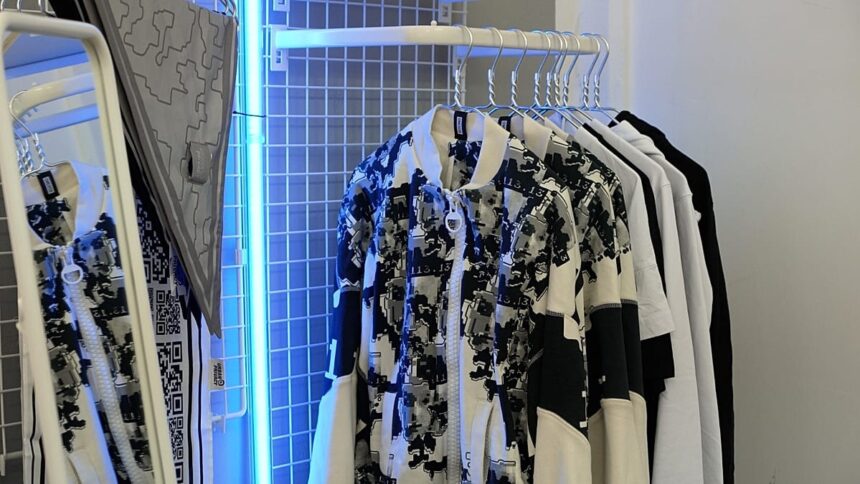
Urban Privacy, founded by designers Nicole Scheller and Daniel Preuß, has spent several years creating anti-surveillance products, including jackets with face-inspired patterns, unconventional garments and smartphone-blocking accessories that aim to interfere with digital monitoring.
The company says its products do not make users completely invisible, but they can disrupt certain forms of automated identification. Its jackets feature patterns designed to confuse AI-powered cameras, while loose and irregular shapes make it more difficult for surveillance software to determine characteristics such as gender from video footage.
“The main problem is simply that we do not know where the data ends up,” Scheller said, describing personal data as a valuable resource in the digital economy. She pointed to companies such as Meta, which produces camera-equipped smart glasses, as examples of how image collection is becoming increasingly common.
Among Urban Privacy’s most popular products is a smartphone pouch that blocks communication signals, including GPS, preventing devices from being tracked or located.
Scheller developed the idea for the company while studying fashion design, where she began exploring ways that clothing could respond to growing surveillance systems.
“Surveillance systems are all about capturing identities, while fashion is about expressing identity outwards,” she said. “That is why I think it is an interesting area of tension to use fashion both to protect identity and at the same time raise awareness of the issue.”
The company’s designs are intentionally eye-catching. One scarf, for example, includes a QR code that leads people who scan it to a message discouraging photography rather than to conventional online information.
Urban Privacy says interest in privacy-focused products is growing as more people become aware of how surveillance technologies collect and use personal information.
“We have the impression that interest in and awareness of the topic are growing – more people are engaging with it and it is gaining visibility on many platforms,” Preuß said.
The debate comes as governments explore wider uses of artificial intelligence in public security. In March, Interior Minister Alexander Dobrindt announced plans to introduce smart cameras at railway stations capable of collecting biometric information.
The proposal has drawn criticism from privacy organisation AlgorithmWatch, which warned that expanded surveillance could lead to widespread tracking and reduce anonymity in public spaces.
“The planned surveillance measures would create the conditions for blanket tracking of everyone in public space and would mean the end of anonymity,” the organisation said.
The German Police Union (GdP), however, supports the use of AI-assisted video monitoring, saying such systems can help officers analyse large amounts of footage, identify irregularities and respond more efficiently.
Smart surveillance cameras are already operating in several German cities, although most currently work without biometric analysis. In many cases, people recorded by the systems appear only as digital outlines.
Hesse remains an exception, with police testing real-time biometric facial recognition technology in areas including Frankfurt’s station district. Authorities say the technology is intended to identify potential terrorist threats and assist in locating missing people and kidnapping victims.