

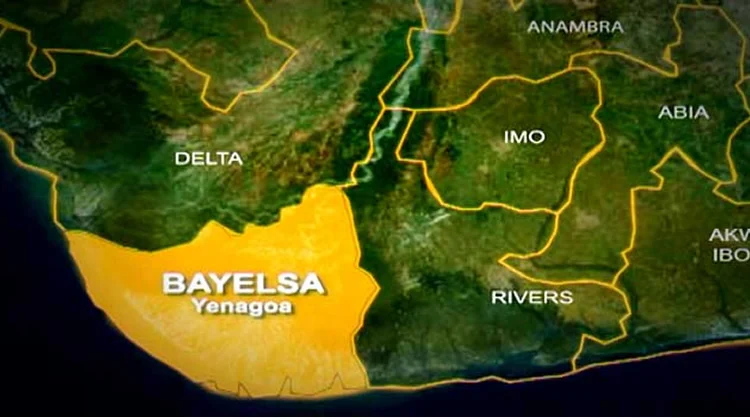
At least four people, including two children, have died after a passenger boat capsized at the river junction between Oweikorogha and Otuan communities in Southern Ijaw Local Government Area of Bayelsa State according to Channels News report.
Some passengers were still missing at the time of filing this report, while others were rescued and search and rescue operations continued for the missing people.
A survivor alleged that the wooden boat, popularly referred to as a “love boat,” was overfilled with passengers and their properties, which could have led to the accident.
The Bayelsa State Police Command confirmed the incident in a statement, saying the boat was travelling from Ayama community to Ukubie for a burial ceremony when it capsized at about 11 a.m. on Friday, November 20, 2026.
The preliminary police report indicated that the boat developed a mechanical problem while navigating the waterways.
The Bayelsa tragedy adds to a grim toll of boat accidents across Nigeria in 2026, renewing concerns about safety on the country’s inland waterways.
On January 4, 24 people died after a canoe capsized in Adiyani village, Guri, Jigawa State. Ten passengers were rescued, while 14 were initially reported missing.
On February 16, 14 people, including 13 women and a child, died when a boat carrying more than 100 passengers capsized in Kebbi State after a wedding celebration.
In July, six people died and 15 were rescued after a canoe carrying about 40 passengers capsized in Jigawa.
August brought another major tragedy in Sokoto, where 46 people died and 16 were initially missing.
In September, eight died in a speedboat collision in Cross River, while four teenage girls died in another Jigawa accident.
The recurring accidents have been blamed on overcrowding, poor maintenance, lack of safety equipment, and weak enforcement of regulations on Nigeria’s waterways. In many rural communities, boats remain the only means of transportation, forcing passengers to accept risky conditions.
The Bayelsa State Government has repeatedly called for stronger safety measures, but enforcement remains a challenge in the riverine communities of the Niger Delta, where boats are often unregistered and operators untrained.