




Maha Christopher
Players will no longer be allowed to leave the field to receive tactical instructions from coaches when goalkeepers are being treated for injuries at the 2026 FIFA World Cup.
According to The Punch, FIFA’s Head of Refereeing, Pierluigi Collina, announced the new measure on Sunday as part of efforts to stop teams from using goalkeeper injury stoppages as unofficial tactical timeouts.
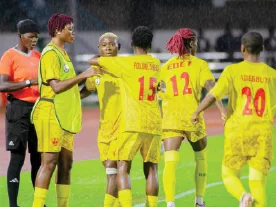
The rule is designed to prevent players from gathering around their technical areas during treatment breaks, a practice that has increasingly been used by teams to regroup, receive instructions from coaches or disrupt the momentum of opponents.
Speaking ahead of the tournament, Collina said FIFA had already informed coaches of all 48 participating teams that referees would strictly enforce the directive.
“We had a workshop with all the coaches of all the 48 teams, and we told them that referees will be proactive.
“They will not allow the two teams to go to the benches when a goalkeeper is lying on the ground injured.
“The goalkeeper has the right to be injured, but the players do not have the right to leave the field of play to have a sort of timeout with their respective coaches,” he said.
The issue has generated debate in recent years, with some managers accusing opponents of exploiting injury stoppages for tactical purposes.
In November, Leeds United manager Daniel Farke alleged that goalkeeper Gianluigi Donnarumma used an injury stoppage to help his team regroup and break the rhythm of the game.
Collina acknowledged that referees would be tasked with managing the new rule but clarified that players moving toward the technical area would not automatically be sanctioned.
“It’s quite weird that there really is only the referee, the physio and the goalkeeper on the field of play.
“All the other players leave the pitch, and it is not good,” he said.
The effectiveness of the measure remains uncertain, as matches at the 2026 World Cup will also include three minute hydration breaks in each half, which could still provide opportunities for coaches to communicate with players.
Meanwhile, the International Football Association Board has approved a change to VAR protocols that will allow video reviews of certain attacking fouls committed before the ball is put into play, adding another officiating adjustment ahead of the tournament.