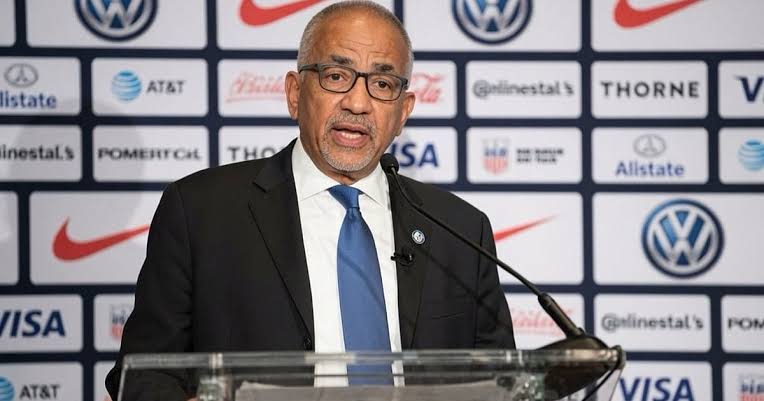
The FIFA stake sale controversy has deepened after Carlos Cordeiro resigned as senior adviser to FIFA President Gianni Infantino with immediate effect.
According to Sky News, Cordeiro stepped down in protest against FIFA’s proposal to sell private investors a stake in a new commercial company linked to the World Cup and other tournaments.
Cordeiro said he could not continue in his position while FIFA considered a deal that he believed would damage the sport’s long-term future.
He made it clear that he did not help develop the proposal and opposed it completely.
“I cannot stand by while FIFA considers selling a stake in the World Cup,” Cordeiro said.
He described the proposal as a bad deal for FIFA’s member associations, the wider football community and future generations.
His departure increases the pressure on Infantino as opposition to the plan grows across international football.
Why Cordeiro rejected FIFA stake sale
FIFA has proposed establishing a new subsidiary known as FIFA Forward Enterprise.
The company would reportedly manage commercial activities connected to the World Cup and other FIFA competitions.
FIFA plans to value the subsidiary at about $20 billion and offer external investors a stake of up to 20 per cent. The arrangement could raise approximately $4.2 billion.
However, Cordeiro questioned why FIFA needed private investment when the organisation already held substantial reserves and carried no debt.
He pointed to FIFA’s reported revenue of $15 billion between 2022 and 2026 as evidence that the governing body could finance football development itself.
Cordeiro argued that selling a permanent interest in FIFA’s most valuable commercial asset made little financial sense.
He warned that the arrangement could amount to mortgaging football’s future without a convincing reason.
The former banker also rejected suggestions that outside investors were required to unlock FIFA’s commercial potential.
He said experienced football professionals had already generated record income for the organisation and possessed the expertise needed to continue that growth.
Concerns raised over transparency
Cordeiro also questioned the process used to develop and present the FIFA stake sale proposal.
He asked why FIFA was pursuing the deal now and what level of oversight would apply to the new company.
He also demanded clarity about who would benefit, whether FIFA conducted a competitive selection process and what influence investors would eventually receive.
“What governance will be in place? What will investors ultimately gain, and at what cost to football?” he asked.
Cordeiro said FIFA had failed to provide adequate answers to these important questions.
Despite this uncertainty, FIFA’s member associations were reportedly given a short period to consider a decision with major consequences for the sport.
The former adviser criticised the timeline, saying associations should not face pressure to approve such a significant proposal without proper consultation.
He argued that decisions involving FIFA’s biggest competitions required transparency, informed discussion and effective oversight.
Cordeiro’s experience strengthens criticism
Cordeiro’s resignation carries added weight because of his experience in football administration and international finance.
He served as president of the United States Soccer Federation between 2018 and 2020. He also helped lead the successful joint bid by the United States, Canada and Mexico to host the 2026 World Cup.
Before entering football administration, Cordeiro built a long career in international banking and served as a vice chairman at Goldman Sachs.
FIFA appointed him as a senior adviser in 2021 to work on global strategy, governance and initiatives aimed at growing football.
At the time, Infantino described him as the right person to help FIFA modernise its regulatory system and expand opportunities across the sport.
Cordeiro said his financial experience helped him understand both the value of FIFA’s commercial assets and the consequences of surrendering a permanent share to private investors.
He added that protecting football should remain FIFA’s primary responsibility rather than maximising commercial returns at any cost.
Pressure grows on Infantino
Cordeiro’s resignation comes as FIFA faces mounting resistance from regional confederations and national football associations.
UEFA and its 55 member associations have threatened to boycott FIFA competitions if the organisation proceeds with the proposed structure.
Concacaf has also rejected the plan, raising concerns about governance, transparency and the speed of the decision-making process.
The Asian Football Confederation has expressed solidarity with those concerns and called for FIFA to review its governance arrangements.
Opponents fear that private investors could eventually influence commercial decisions involving tournament scheduling, broadcasting and competition formats.
FIFA has maintained that external investors would hold only minority interests and would not control sporting or governance decisions.
The governing body also insists that the proposal would generate additional development funding for its 211 member associations.
However, Cordeiro said FIFA already possessed enough resources to provide greater support without selling part of its World Cup business.
Resignation adds to FIFA leadership crisis
Cordeiro said he reached his decision after carefully examining the plan and its possible consequences.
He resigned immediately, ending more than five years of work with the global governing body.
“It has been the privilege of a lifetime to serve FIFA,” he said, while praising colleagues who remained committed to protecting the game.
He encouraged other FIFA officials to speak publicly because decisions of such magnitude should serve football rather than those seeking financial gain.
The resignation represents one of the most significant internal protests against Infantino’s proposal.
It also raises further questions about whether FIFA can secure enough support from its member associations to proceed.
With opposition growing across Europe, North America, Central America, the Caribbean and Asia, Infantino may face increasing pressure to withdraw or substantially revise the proposal.
Cordeiro maintained that FIFA must place the long-term interests of the sport ahead of any immediate financial return.
“When those principles come into conflict, football must come first,” he said.