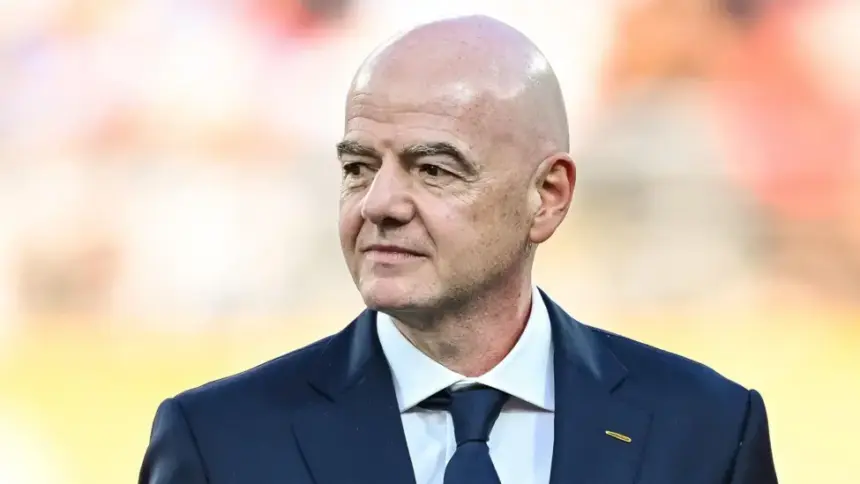
FIFA President Gianni Infantino has withdrawn the controversial FIFA investment plan that would have allowed private investors to acquire stakes in the governing body’s competitions.
According to the BBC, Infantino abandoned the proposal after widespread resistance from regional confederations, national associations and senior officials within FIFA. He acknowledged that the initiative had created divisions which no longer served its original purpose.
“Having listened carefully to all the views, it has become clear that the project has created divisions,” Infantino said.
He added that the divisions were no longer compatible with the proposal’s stated objective, regardless of how much support it might have received.
“As a result, this proposal will not proceed,” he announced.
The decision represents a major retreat for Infantino, who initially presented the initiative as a way to generate additional funding for football development worldwide.
Under the proposal, FIFA would have established a commercial subsidiary to manage its major tournaments and related business operations.
Private investors would have been allowed to purchase minority interests in the new company, which would oversee competitions including the men’s and women’s World Cups.
FIFA investment plan faces widespread opposition
The FIFA investment plan quickly encountered resistance after details emerged about its structure, funding arrangements and decision-making process.
UEFA, which represents European football, led the opposition and warned that its 55 member associations could boycott FIFA competitions if the proposal continued.
European officials argued that the World Cup belonged to the wider football community and should not become an investment product for private companies.
Concacaf, which governs football in North America, Central America and the Caribbean, also rejected the proposal.
Its members raised questions about transparency, consultation and the possible long-term consequences of transferring commercial interests to external investors.
The Asian Football Confederation later expressed solidarity with UEFA and Concacaf, further reducing Infantino’s chances of securing enough votes.
FIFA needed the support of at least 106 of its 211 member associations to move forward with the arrangement.
UEFA has 55 members, while the AFC has 46. Concacaf’s opposition added another large group of votes against the proposal.
If members followed the positions adopted by their confederations, at least 136 associations could have opposed the plan.
That calculation made approval increasingly unlikely and raised the possibility of a damaging confrontation within world football.
Member associations offered financial incentives
Infantino had offered FIFA’s 211 member associations as much as $40 million each if they supported the proposed investment arrangement.
An initial payment of $20 million would have become available to associations that accepted the plan before the September 19 deadline.
Further funding would have followed through an expanded football development programme over later financial cycles.
Infantino argued that the money could help smaller associations build stadiums, training centres and grassroots programmes.
He maintained that many football nations lacked the resources required to develop players, coaches and competitions without additional FIFA support.
However, opponents questioned why FIFA needed private investors when the organisation already possessed substantial reserves and reported record revenues.
Critics also expressed concern about the short period given to associations to consider a proposal with major consequences for football’s commercial future.
Senior FIFA figures criticise proposal
The controversy also triggered public criticism from senior figures inside FIFA.
Chief Operating Officer Kevin Lamour said members of the organisation’s administration had been deceived about the development of the project.
Lamour described the proposal as the work of one person and questioned the lack of wider consultation within FIFA.
He said a president should unite people and inspire confidence rather than create division across the organisation.
Lamour also accepted that his comments could cost him his position but insisted that speaking publicly was necessary.
Carlos Cordeiro, Infantino’s senior adviser on global strategy and governance, resigned over the plan.
Cordeiro previously served as president of the United States Soccer Federation and held a senior position at Goldman Sachs.
He said FIFA did not need outside investment to unlock the commercial value of its tournaments.
Cordeiro described the proposal as a poor deal for member associations and the wider football community.
He warned that selling part of FIFA’s most valuable commercial asset could mortgage the future of the sport without sufficient justification.
Cordeiro also raised questions about who would benefit, how investors would be selected and what influence they could eventually gain.
What FIFA proposed
FIFA planned to create a subsidiary known as FIFA Forward Enterprise to manage its commercial and event operations.
The company would have handled revenue connected to broadcasting, sponsorship, ticketing, licensing and FIFA competitions.
External investors could have acquired minority, non-controlling stakes in the company.
FIFA said it would retain control over sporting decisions, tournament rules and the international football calendar.
The proposed subsidiary reportedly carried a valuation of about $20 billion, with FIFA considering the sale of a stake of up to 20 per cent.
The arrangement could have raised billions of dollars for distribution among FIFA’s member associations.
A document prepared by investment bank JPMorgan outlined plans to expand FIFA’s tournaments and significantly increase future payments to national associations.
The document described the World Cup as the most widely watched sporting event but suggested that FIFA remained under-monetised.
It also proposed new business initiatives and performance-based compensation to attract experienced commercial executives.
However, critics noted that the document gave little attention to women’s football despite including the Women’s World Cup among the competitions affected.
An investor group led by Thrive Eternal was expected to participate in the proposed subsidiary.
The investment firm is connected to Joshua Kushner, whose brother Jared Kushner is married to the daughter of United States President Donald Trump.
Trump said he had not discussed the plan with Infantino despite the close relationship they developed after his return to office.
Infantino promises renewed dialogue
Infantino said FIFA’s purpose had always been to unite the football community and improve the sport.
He promised to bring interested parties together in the coming weeks to rebuild cooperation after the dispute.
“Our purpose has always been — and will always be — to unite and improve,” he said.
Infantino added that FIFA would continue seeking ways to expand football, particularly in countries that required the most financial assistance.
AFC President Sheikh Salman bin Ebrahim Al Khalifa welcomed the decision to abandon the plan.
He said major decisions about football’s future should follow proper consultation, collective dialogue and established governance structures.
The AFC argued that the controversy revealed wider problems with FIFA’s consultation and decision-making processes.
It said the issues exposed by the proposal extended beyond the investment plan and would require further attention.
Pressure remains on Infantino
Although withdrawing the proposal has ended the immediate dispute, Infantino continues to face questions about his leadership.
The controversy has weakened confidence among several associations that had previously supported his presidency.
Before the dispute, many observers expected him to face little opposition when seeking another term as FIFA president.
The organisation’s next presidential election will take place at the FIFA Congress in Morocco.
Potential candidates must declare their intention to contest before the nomination deadline in November.
It remains unclear whether the controversy will encourage another football official to challenge Infantino.
Some associations had already pledged their support to him, but the events surrounding the investment proposal could lead them to reconsider.
Cordeiro’s resignation and Lamour’s public criticism also exposed serious divisions within FIFA’s senior leadership.
Reports suggested that several vice-presidents did not receive full information about the plan before it became public.
Infantino must now repair relationships with regional confederations and restore confidence in FIFA’s governance process.
The decision to withdraw the FIFA investment plan prevents an immediate World Cup boycott and avoids a possible split within international football.
However, the controversy is likely to remain a major issue as member associations assess Infantino’s leadership and FIFA’s future direction.