The Federal Government has called for immediate investigations into the deaths of two Nigerians in South Africa, expressing renewed concern over persistent xenophobic and Afrophobic attacks targeting foreigners in the country.
The Ministry of Foreign Affairs, in a statement issued on Friday, September 11, 2026, said the deaths of Bishop Taiwo Michael Fakunle and James Uchechukwu Nwankwo required urgent and transparent investigations by the relevant South African authorities.
The statement, signed by the ministry’s spokesperson, Oluwafemi Adeniyi, said Fakunle was killed at his residence in Kensington, Johannesburg, on September 4.
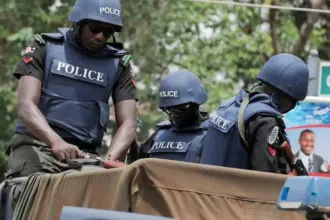
Nwankwo, meanwhile, died in Somerset, Cape Town, a day later following what the Nigerian government described as “gruesome interrogation techniques” allegedly used by officers of the South African Police Service.
Nigeria condemned both incidents and urged South African authorities to establish the circumstances surrounding the deaths, identify those responsible and ensure that they face justice under the law.
The government said the incidents were particularly disturbing because they occurred against the backdrop of repeated attacks on foreigners, especially Africans, in South Africa.
It also raised concern over allegations involving law enforcement personnel, saying the reported treatment of Nwankwo underscored the need for greater scrutiny of the conduct of security officials.
Diplomatic pressure on South Africa
According to the ministry, Nigeria has repeatedly used diplomatic channels to raise concerns over xenophobia and Afrophobia in South Africa.
The two countries have also agreed in principle to establish an Early Warning Mechanism aimed at preventing and responding to such incidents. Nigeria has signed the agreement, but South Africa is yet to complete the signing process.
Nigeria has separately brought the issue of recurring attacks against its citizens before the Economic Community of West African States and the African Union.
The government said the latest deaths had intensified concerns over the security of Nigerians and other foreigners living and doing business in South Africa.
It added that it was considering additional measures to secure stronger cooperation from the South African authorities.
The Federal Government also extended its condolences to the families and associates of the deceased, as well as the wider Nigerian community in South Africa.
National Assembly suspends South Africa engagements
The diplomatic demand came shortly after the National Assembly announced the suspension of official visits and legislative engagements involving South Africa.
On Friday, lawmakers directed members, committees, officials and staff to suspend participation in South African-hosted or South African-organised parliamentary activities until further notice.
The decision followed reports of Nigerians being killed, injured or displaced, with some reportedly forced to abandon their businesses, homes and properties during renewed xenophobic attacks.
President Bola Tinubu has previously called for a continent-wide response to xenophobia and Afrophobia. In August, he urged the African Union to take up the issue and place the attacks on the agenda of its 40th Ordinary Session scheduled for January 2027.
The latest developments indicate that Nigeria’s response is expanding beyond diplomatic protests, with government action now involving parliamentary restrictions, evacuation efforts and demands for investigations into individual deaths.
More than 1,600 Nigerians evacuated
Nigeria has also undertaken evacuation efforts for citizens affected by the attacks.
A total of 1,640 Nigerians have so far been returned from South Africa, according to the Federal Government. Of that number, 1,385 were evacuated with government funding, while 255 others were assisted through philanthropic support.
The exercise began in June, when the first group of 262 Nigerians left Johannesburg for Lagos on June 11 aboard a government-funded Air Peace flight.
By July 11, six batches had returned 1,174 Nigerians to the country through Air Peace and ValueJet.
The Redeemed Christian Church of God also contributed $265,854 towards the evacuation of 500 Nigerians described as distressed.
With the deaths of Fakunle and Nwankwo, the Federal Government is now pressing South African authorities for formal investigations, amid growing demands for stronger measures to protect Nigerians and other African nationals living in the country.