
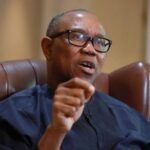


An energy expert, Odion Omonfoman, who is the Lead Consultant on Power to the Nigeria Governors’ Forum, has warned that the planned removal of electricity subsidy through deductions from the federation account could deepen inequality among states due to wide differences in power consumption and access.
The Federal Government had earlier proposed deducting about N1.8 trillion annually from the federation account between 2026 and 2028 as part of efforts to reduce the subsidy burden it said has resulted in an electricity subsidy backlog of more than N6 trillion.
Commenting on the plan, Mr Omonfoman said applying a blanket deduction across all states would create serious moral hazard and unfairness, noting that electricity consumption levels vary significantly from state to state.
He pointed out that Lagos State alone accounts for more than 40 per cent of national electricity consumption, while states such as Taraba have nine out of 16 local government areas completely disconnected from the national grid.
He also noted that in Bayelsa State, the national grid was virtually absent even in the state capital until recently.
“In many States, entire LGAs have been disconnected for decades. Is it justifiable for the FAAC allocation of Taraba State (with minimal access) to be deducted to subsidise the power consumption of Lagos State,” he said.
Mr Omonfoman said the accumulated subsidy debt was largely the result of electricity distribution companies’ inability to remit the full value of power supplied to them.
“This is caused by high operational losses and commercial inefficiencies of DisCos; Tariff shortfalls arising from the regulator (NERC) setting tariffs lower than generation/supply costs; and market shortfalls where DisCos fail to meet invoices from the Market Operator (MO) and Nigerian Bulk Electricity Trading (NBET),” he stated.
He added that tariff and market shortfalls were the outcome of deliberate policy decisions by the Federal Government to keep electricity prices low for political or socio-economic reasons, arguing that the responsibility for settling such shortfalls rests solely with the Federal Government and cannot be transferred to states and local governments.
According to him, the proposal also lacks constitutional backing, as there is no subsidiary legal framework permitting such deductions from states’ and local governments’ allocations.
“Specifically, the Electricity Act (EA) 2023 neither makes nor implies any provision for the FG to debit States and LGAs for subsidy payments to the power sector. The EA 2023 does not mandate any tier of government (Federal, State, or Local) to bear electricity subsidies in either the wholesale or sub-national electricity markets.”
He further explained that the so-called electricity subsidies are essentially shortfall payments owed by Nigerian Bulk Electricity Trading Plc (NBET) to generation companies and gas suppliers, noting that NBET is a limited liability company wholly owned by the Federal Government, not the federation comprising the Federal Government, 36 states and 774 local governments.