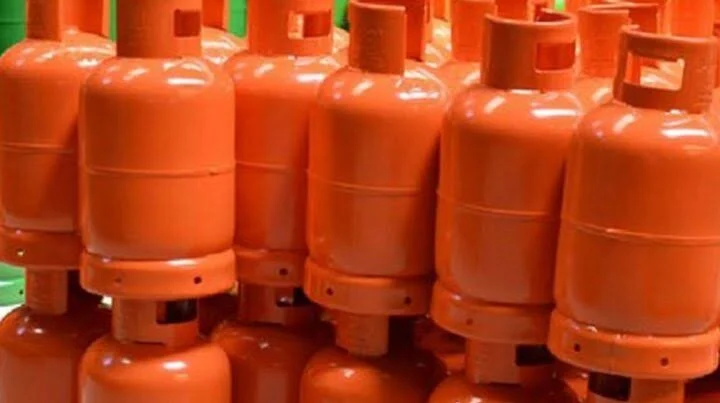
Households across parts of the country are beginning to experience relief as retail prices of Liquefied Petroleum Gas, popularly known as cooking gas, decline following improved product supply and softer depot prices, The PUNCH reports.
The latest market update from gas marketers showed that retail LPG prices have started easing in major cities after weeks of elevated prices, although the reductions have not been uniform because of varying transportation costs, distance from supply depots and retailer margins.
Checks by marketers indicated that cooking gas is now selling for between N1,100 and N1,350 per kilogramme in Lagos, Ibadan and Abeokuta, while consumers in Benin City, Port Harcourt and Warri are paying between N1,150 and N1,400 per kilogramme.
In Onitsha and Enugu, retail prices range from N1,200 to N1,450 per kilogramme, while consumers in Abuja pay between N1,250 and N1,500 per kilogramme.
The National President of the Nigerian Association of Liquefied Petroleum Gas Marketers, Edu Inyang, told our correspondent that northern cities, including Kano and Kaduna, currently record prices of N1,300 to N1,550 per kilogramme, while consumers in Maiduguri and parts of the North-East still pay the highest prices, ranging from N1,350 to N1,650 per kilogramme, reflecting the additional logistics costs of transporting products to the region.
Overall, Inyang said the national retail price range now stands at approximately N1,100 to N1,650 per kilogramme, although some neighbourhood retailers continue to charge above the range where transportation and distribution costs remain elevated.
The improvement marks a reversal from the sharp increases witnessed from May, when supply tightness and rising depot prices pushed cooking gas costs significantly higher across several parts of the country.
According to the NALPGAM president, the latest decline follows improved product availability from both domestic production and imports, as well as lower depot prices. He also attributed the easing to increased competition among marketers and the disappearance of panic buying that had briefly tightened supplies.
“Following reports of improved LPG supply and softer depot prices in late June 2026, retail cooking gas prices have started easing in some markets, although the reduction has not been uniform across Nigeria. Transport costs, distance from depots, and retailer margins still create noticeable differences between cities,” Inyang said.
“Overall, the national retail range is roughly N1,100 to N1,650 per kilogramme, with some neighbourhood retailers charging slightly above this range where logistics costs remain high. The recent easing reflects lower depot prices as supply improved, increased product availability from domestic sources and imports, reduced panic buying and hoarding after government market interventions, and more competition among marketers in major cities.”
The development is expected to provide some relief to households grappling with rising living costs, although industry players noted that prices may continue to differ from one location to another depending on local distribution expenses.
Based on the prevailing retail prices, a 5kg cylinder refill now costs between N5,500 and N8,250, while a 6kg refill ranges from N6,600 to N9,900. A standard 12.5kg cylinder refill is expected to cost between N13,750 and N20,625, depending on location and retailer.
Despite the improvement, marketers cautioned that retail prices are yet to stabilise nationwide, noting that communities located farther from major LPG depots may continue to experience relatively higher prices because of transportation costs. The Minister of Petroleum Resources has also intervened, warning operators against hoarding and profiteering.