




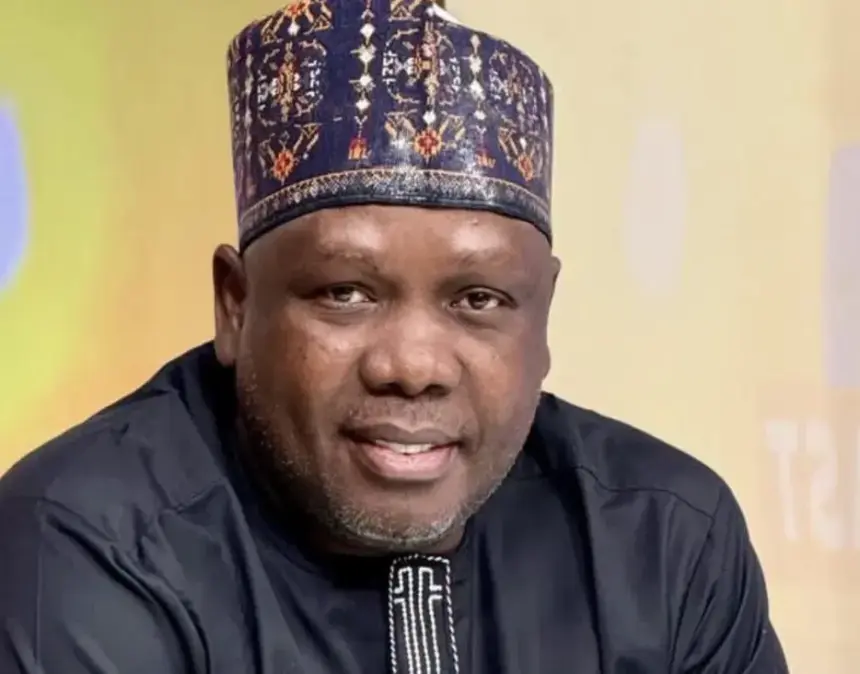
Presidential aide Daniel Bwala has alleged that a rivalry between the Nigerian Army and the Nigerian Air Force, described as a Buhari-era military rivalry, existed during former President Muhammadu Buhari’s administration. As a result, ground troops were sometimes left without air support during military operations. Indeed, the Buhari-era military rivalry had significant consequences for operational effectiveness.
According to Vanguard, Bwala made the claim during an appearance on The Link Up Podcast. This is a panel discussion hosted by EchoRoom and published on Friday. Significantly, much of the podcast focused on the longstanding rivalry in the military during Buhari’s era.
Bwala said a disagreement between the leadership of the Army and the Air Force affected cooperation between both services. Consequently, requests for air cover allegedly received no response in some situations, a scenario attributed to Buhari-era military rivalry between the branches.
“I remember during Buhari there was this disagreement that was imported to be between the Chief of Air Staff and that of the Army, so that whenever an operation was undertaken, when they asked for air cover, there wouldn’t be support. In this administration, it is not so. There is coordination or cooperation,” he said.
The presidential aide made the comments while answering a question about allegations that people sympathetic to terrorist organisations had infiltrated Nigeria’s security agencies. In considering Buhari-era military rivalry, security lapses and infiltration risks were also discussed.
He rejected claims that soldiers deliberately protected terrorists during attacks, describing the suggestion as speculation without evidence. This issue was often raised in the broader conversation around rivalry within the military in Buhari’s era.
“I don’t think so. You see, that’s a conjecture, except there’s a live case,” Bwala said.
However, he acknowledged that security agencies could have isolated cases involving compromised officers or personnel. These individuals allegedly provided information to criminal groups. This demonstrates how rivalry in Nigeria’s military hierarchy during the Buhari era cast a long shadow over operational integrity.
“You cannot rule out the facts that they may have one or two agents in the army, anywhere else, that providing… Our police have always been arrested, and soldiers arrested involved in this kind of thing,” he said. Evidently, the consequences of Buhari-era military rivalry can be far-reaching even post-administration.
Bwala added that countries around the world face similar cases of security personnel or contractors compromising sensitive information.
“This will happen anywhere in the world. Snowden was a contractor to the US national security. These are elements that can happen, and why I didn’t want to talk much on that is because there are measures we’re taking and we don’t want people to know,” he added. Yet, a key takeaway for Nigeria is that a military rivalry such as seen in the Buhari-era can create vulnerabilities.
The presidential aide also alleged that Nigeria’s security crisis had an international dimension. In some cases, the rivalry between military branches during Buhari’s time was seen as impacting Nigeria’s global standing.
He referred to demonstrations in parts of northern Nigeria where some protesters displayed Russian flags. This happened following a foreign policy decision by the Federal Government. In the context of Buhari-era military rivalry, it’s clear that internal divisions can have external repercussions.
“If you remember, there was a decision the Federal Government of Nigeria made at that time, immediately we started seeing these people in Nigeria lifting Russian flags,” he said.
Bwala also referenced an unverified allegation previously made by United States lawmaker Scott Perry. This allegation concerned alleged American funding of terrorist organisations. Such international scrutiny may have been intensified by the perception of rivalry within Nigeria’s military hierarchy under Buhari.
He stressed that he was not endorsing the allegation. However, he argued that Nigerian authorities should not dismiss such discussions without examining them. When considering the lessons of the Buhari-era, military rivalry provides essential context for security policy analysis.
“So, me, I’m not saying he’s right or he’s wrong. But what I’m saying is that an event like that has occurred, and as a country we cannot hear that and say you are a liar,” he said.
Bwala also rated President Bola Tinubu’s performance highly, citing growth in government revenue and foreign reserves. In contrast to the Buhari-era military rivalry, Bwala depicted Tinubu’s tenure as cooperative.
“He has done more than enough to earn the trust of Nigerians,” he said.
However, he maintained that Nigerians should ultimately decide whether Tinubu deserves another term in office. Finally, the rivalry that characterised military affairs during Buhari’s era continues to shape the national conversation.