

Belarus has released 123 prisoners, including top opposition figures, after the United States agreed to lift key sanctions on the country.
Among those freed is prominent opposition activist Maria Kolesnikova, who has been in detention since 2020, and Nobel Peace Prize winner Ales Bialiatski.
The releases followed talks in Minsk between Belarusian authorities and the United States’ special envoy for Belarus, John Coale, under President Donald Trump’s administration.
As part of the agreement, the US said it would lift sanctions on potash, a major Belarusian export and a key ingredient used in fertiliser production.
Coale said, “As relations between the two countries normalise, more and more sanctions will be lifted.”
Kolesnikova, who was arrested five years ago during mass protests against President Alexander Lukashenko, spent much of her imprisonment in isolation.
Her sister, Tatiana Khomich, confirmed her release in a video call shortly after it happened.
“She is free, she looks fine, she looks good,” Khomich told the BBC, adding that she was eager to see her sister in person.
According to Khomich, Kolesnikova expressed gratitude to those involved in the negotiations.
“She said, ‘thank you to the US administration, President Trump, and to the Belarus government as well for leading and talking and having these negotiations,’” she said.
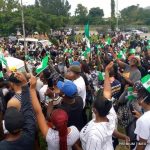
A group of the freed prisoners is expected to arrive in Vilnius, the capital of neighbouring Lithuania, with a crowd already gathering near the US embassy there.
The move is seen as a diplomatic boost for President Lukashenko, who remains unrecognised as Belarus’ legitimate leader by the European Union following disputed elections in 2020.
Those elections sparked widespread protests that were forcefully crushed by security forces, leading to hundreds of arrests and continued political repression.
Western countries, including the US and EU, later imposed sanctions, which were expanded after Russia launched its full invasion of Ukraine in 2022, using Belarusian territory to move troops and fire missiles.
Belarusian state media quoted Coale as saying the sanctions on potash would be lifted immediately.
He also said he discussed the war in Ukraine with Lukashenko and explored what role Belarus could play in talks with Russian President Vladimir Putin.
The engagement with Minsk marks a significant shift in US policy and contrasts sharply with the European approach, which continues to focus on sanctions and diplomatic isolation of the Belarusian government.