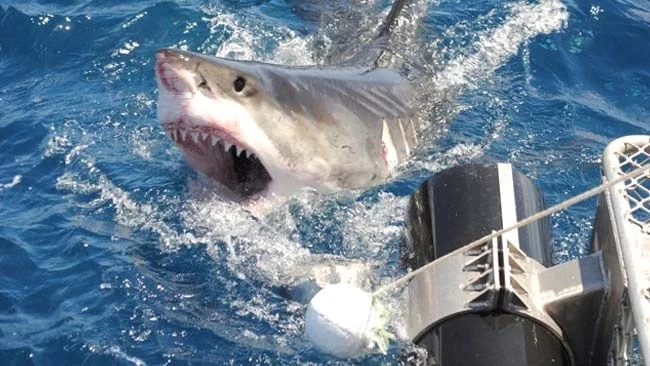
Western Australia’s government has authorised the capture and killing of a great white shark believed to have fatally attacked a swimmer off Perth’s northern coast, in an unusually targeted response that stops short of a broader shark cull.
Fisheries Minister Jackie Jarvis said the order was made after witnesses identified the shark following Friday morning’s attack near Sorrento Beach, where a 63-year-old man was killed in front of beachgoers.
Authorities continued searching the area on Saturday, with beaches across Perth’s northern suburbs remaining closed while emergency crews searched for the victim’s body and monitored the coastline.
The man’s family returned to the beach as members of the local community gathered to leave flowers and pay tribute.
Targeted action, not a shark cull
Ms Jarvis described the decision to authorise the shark’s capture and destruction as an exceptional measure, saying it was believed to be the first such order issued in Western Australia in about a decade.
A capture device, similar to the drum lines used to catch and tag sharks, was placed in the water on Friday in an attempt to locate the untagged great white. Authorities were unable to redeploy the equipment on Saturday because of rough seas and unfavourable weather.
Despite the order, Ms Jarvis rejected calls for a wider campaign against white sharks.
She said the species is internationally protected and argued that the government’s response should focus on managing specific risks rather than attempting to remove apex predators from the ocean.
The minister also cautioned that no shark-management program could eliminate the risk entirely for people using Western Australia’s beaches.
Government considers stronger safety measures
The fatality has prompted renewed discussion about whether existing shark-monitoring and beach-safety measures are sufficient.
Western Australia currently uses a combination of shark tagging and tracking, public warning systems, beach enclosures, notification technology and personal deterrent devices.
Ms Jarvis said the government would examine the state’s existing strategy and discuss possible additional measures with emergency services and police.
Increasing the use of drones to monitor coastal waters is among the options being considered. Surf Life Saving WA clubs already receive government funding to use drones at some events.
The government is also expected to examine whether its shark-tagging program can be expanded. More than 300 sharks have been tagged in WA, including 227 white sharks.
Ms Jarvis also indicated she was open to discussions with the City of Joondalup about the possible return of a shark enclosure at Sorrento Beach. The enclosure at the beach was removed in 2020.
She said funding is available to local governments seeking to install beach enclosures and that she would be willing to discuss the issue with councils considering such measures.
Northern beaches remain closed
Authorities have kept beaches across the City of Joondalup, from Marmion through to Iluka, closed as investigations and monitoring continue.
The latest death is the third fatal shark attack recorded in Western Australia this year and the latest in a series of incidents that have renewed public concern about beach safety.
It follows the recent attack on 56-year-old firefighter Mel Ismail at a Geraldton beach, about 400 kilometres north of Perth, in which he was injured.
Earlier this year, Steven Mattaboni died following a shark attack near Rottnest Island, while spearfisher Daniel Turpin was killed in an attack near Albany.
Western Australia last recorded three shark-attack deaths in a single year in 2020, when fatalities occurred near Esperance and at Cable Beach in Broome.
Authorities have urged the public to follow beach closures and official safety warnings while the search and monitoring operation continues.