Former Vice President Atiku Abubakar has criticised Nigeria’s current economic situation, describing it as “organised hardship dressed up as reform” under the administration of President Bola Ahmed Tinubu.
Atiku argued that the government’s reform agenda reflects policy inconsistency, weak leadership, and a disconnect from the realities faced by ordinary Nigerians.
Reacting to a recent warning from the International Monetary Fund, he said the global body had only articulated what citizens already experience daily. The chieftain of the African Democratic Congress made these remarks in response to the IMF’s latest position.
The statement was conveyed through his Senior Special Assistant on Public Communication, Phrank Shaibu, and released on Sunday, April 19, 2026.
“At a time when Nigerians were promised renewed hope, what they have received is renewed hardship—raw, relentless, and unforgiving. “The IMF is not breaking news; it is confirming a national emergency that this administration refuses to acknowledge.”
Atiku further faulted the administration for focusing on theoretical economic policies while neglecting their real-life consequences. He noted that many graduates remain unemployed, while small businesses are shutting down under the weight of rising electricity tariffs, taxes, and a harsh operating environment. The ADC leader urged the government to abandon what he termed “trial-and-error economics” and prioritise measures that directly benefit citizens, including stabilising prices, supporting small businesses, lowering transportation costs, and protecting vulnerable groups.
“This is not the time for speeches. It is time for a rescue.
“Leadership must step down from its high horse and walk the dusty streets where Nigerians are struggling to breathe.” “The true test of leadership is simple: are the people better off or worse? Today, Nigerians are worse off—far worse off. And no amount of spin can hide that truth.”
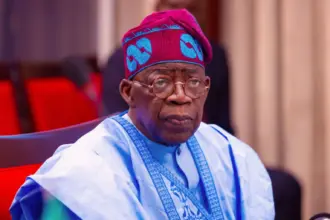
The criticism comes amid ongoing political exchanges between both camps. President Tinubu had earlier challenged Atiku over his record on privatisation while in office, prompting a sharp rebuttal from the former vice president’s camp. Shaibu, speaking on behalf of Atiku, said the president’s remarks highlighted a pattern of inconsistency.
Meanwhile, Tinubu has continued to confront opposition figures over past privatisation efforts as political alignments begin to take shape ahead of the 2027 elections. He has questioned Atiku’s track record and the capacity of opposition coalitions to deliver what he describes as a “New Nigeria,” with public reactions reflecting divided opinions on the issue.