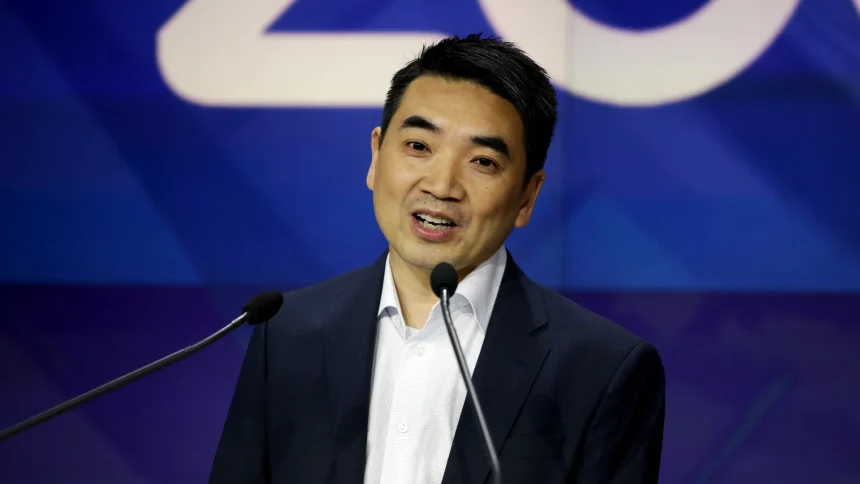
Zoom CEO Eric Yuan has predicted that advances in artificial intelligence could bring an end to the traditional five-day workweek, as automation and digital tools reshape the global workplace.
Speaking during an event organised by the WSJ Leadership Institute, Yuan suggested that within the next five years, rapid developments in AI technology could significantly reduce the need for human labour across multiple sectors.
“What is the world of work going to have in that world?” Yuan asked during the conversation, reflecting on how AI will redefine productivity and workplace expectations.
He acknowledged uncertainty in his prediction, stating, “I think I might be wrong,” but maintained that the trajectory of technological advancement points towards a reduced reliance on traditional work schedules.
Yuan has previously suggested that such advancements could shorten the workweek to three or four days, as AI takes over repetitive functions and boosts productivity.
During the summit conversation, Yuan and Zoom’s Chief Financial Officer, Michelle Chang, outlined the company’s transformation from a video communications platform into what they describe as a “system of action,” where AI not only supports meetings but can also execute decisions made during them.
The Zoom founder highlighted potential benefits of such a shift, noting that reduced workdays could improve work-life balance, allowing individuals to spend more time with family and focus on personal well-being.
His remarks come amid ongoing global debates about the feasibility of shorter workweeks, with some companies experimenting with four-day schedules while others remain cautious about potential impacts on output and profitability.
Yuan remains optimistic that technological innovation will ultimately redefine how people work, making rigid schedules less relevant in the years ahead.