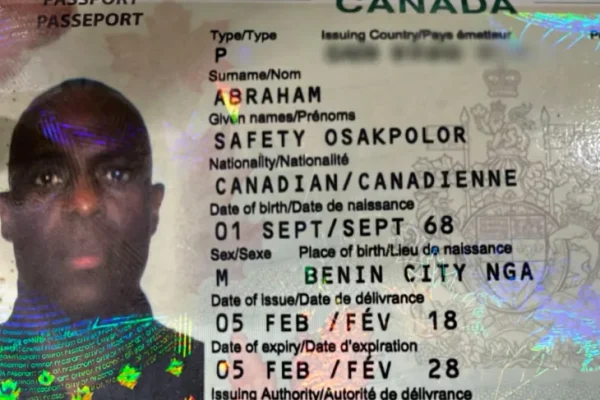
The Cross River State Police Command has disowned a viral flyer circulating on social media, purportedly issued by the Nigeria Police, Okuku Division, declaring an individual wanted over allegations of impregnating eight women and subsequently abandoning them.
The command said the flyer did not originate from it and did not represent any official police communication.
In a statement signed by the Police Public Relations Officer, Sunday Eitokpah, and made available to journalists on Wednesday in Calabar, the police stated that they were not investigating any case involving the individual whose photograph appeared in the flyer, nor were they aware of any investigation relating to the allegations contained therein.
The statement read: “The Cross River State Police Command is aware of a viral flyer circulating on social media, purportedly issued by the Nigeria Police, Okuku Division, Cross River State, declaring an individual wanted over allegations of impregnating eight women and subsequently abandoning them.
“The Command wishes to categorically dissociate itself from the publication, as it did not originate from the Command and does not represent any official Police communication.”
The police clarified that there was no police division known as Okuku Division in Cross River State. What existed in the area was a police outpost, which was not an operational formation empowered to independently investigate a case of the magnitude portrayed in the circulating publication.
“For the avoidance of doubt, there is no Police Division known as Okuku Division in Cross River State. What exists in the area is a Police Outpost, which is not an operational formation empowered to independently investigate a case of the magnitude portrayed in the circulating publication. The flyer is therefore fake and should be disregarded by members of the public,” the statement said.
Eitokpah strongly condemned what he described as the mischievous and malicious use of artificial intelligence and other communication platforms to fabricate information, impersonate security agencies, spread falsehood and mislead unsuspecting members of the public.
“Such acts are capable of damaging reputations, creating unnecessary panic, undermining public confidence in law enforcement institutions and threatening public peace,” he added.
The Commissioner of Police in the state, Ajo Ordue, directed a thorough investigation to establish the origin of the misleading publication and identify those responsible for its creation and circulation, warning that anyone found culpable would face the full weight of the law.
He urged members of the public to disregard the contents of the fake flyer, refrain from sharing or amplifying it, and always verify security-related information through the command’s recognised official communication channels and verified social media platforms.
“The Cross River State Police Command remains committed to protecting lives and property and will not tolerate the deliberate use of misinformation, impersonation or other deceptive communication practices to mislead the public or undermine public peace,” Ordue added.
The Cross River police statement highlights a growing concern in Nigeria over the use of artificial intelligence and social media to fabricate official documents and impersonate security agencies.
In recent months, the Nigeria Police Force and other agencies have repeatedly warned about fake recruitment notices, fabricated press releases and AI-generated images designed to mislead the public.
In September 2026, the police arrested a suspect in Lagos for allegedly using AI to create a fake video of the Inspector-General of Police announcing a recruitment exercise.
The EFCC has also warned about a surge in AI-powered fraud, with scammers using deepfake technology to impersonate bank officials and government figures.